What’s the story?
Sleazy has-been producer Max Bialystock and anxiety-riddled accountant Leo Bloom stumble onto a seemingly genius loophole – the backers of a Broadway flop don’t expect to make any money back, so if someone raised more than they needed and a show closed opening night, they’d stand to walk away with an ill-gotten fortune.
Twenty years after its first London run, and nearly sixty years after Mel Brooks’ original cult comedy, the Menier Chocolate Factory production of this twelve-time Tony winning musical comes to the West End.
This review of The Producers comes of my own volition, having paid to attend.
Where is it playing?
Booking until February 21st at the Garrick Theatre – https://theproducersmusical.com/
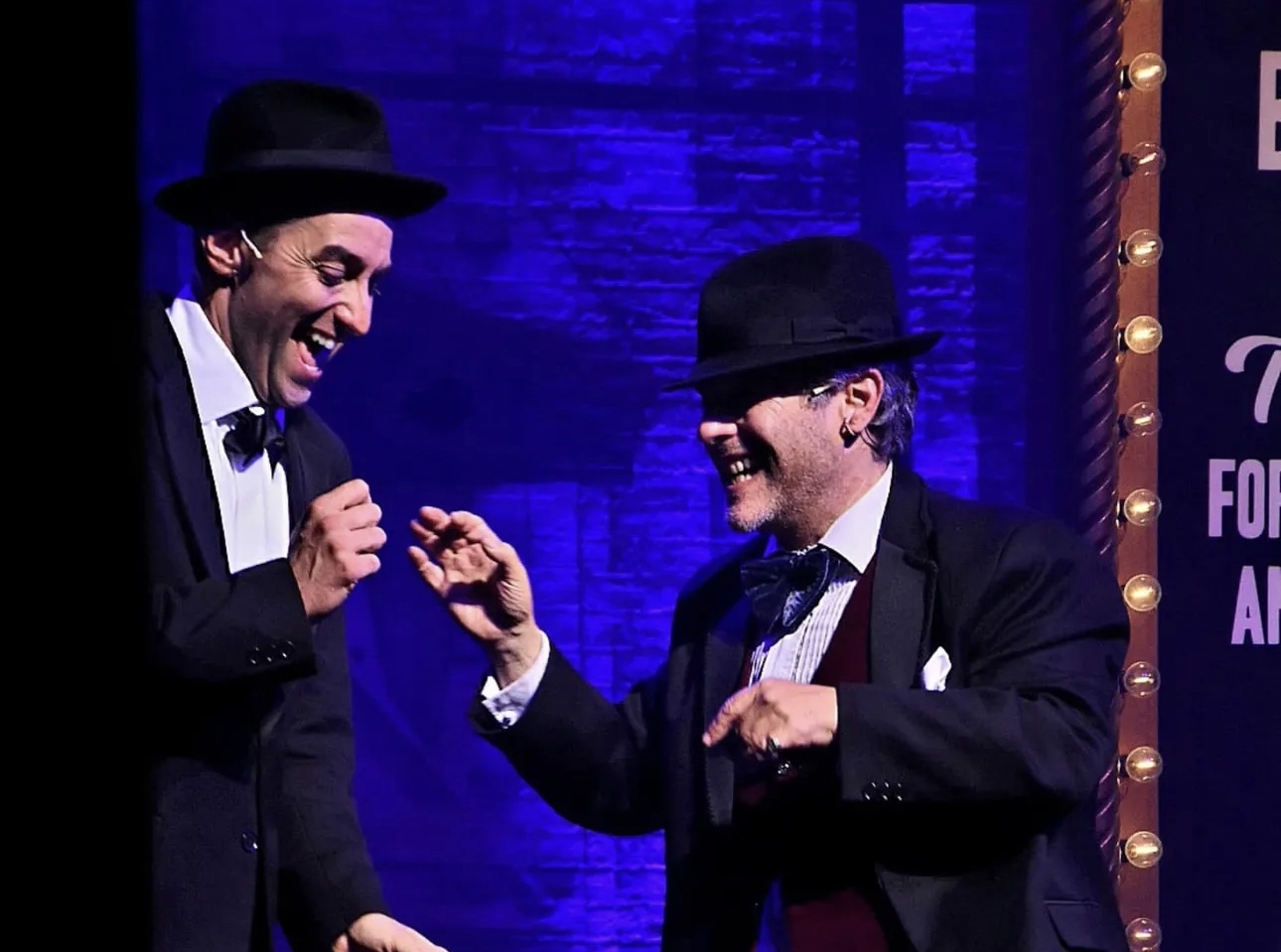
photography by Oviya Thirumalai (@minnale_photography)
Spoiler-Free(…ish) Thoughts
After collecting my thoughts, I caused some confused laughter in a friend by comparing seeing The Producers onstage for the first time to a warm visit home to visit with old friends. I did later clarify that it was more like a warm embrace, where one of the embracer’s arms just happened to be doing a Nazi salute.
Around a decade ago, after a lazy day off spent watching handful of modern movie musicals, a friend and I got into the habit of quoting The Producers ad nauseam. Constantly we’d be in pain, wet, and still hysterical, every “okay” became an “okey-slash-dokey!” and barely a day seemed to pass without that same question, “Remember when Ulla dance?” So it was safe to assume that my visit to the Garrick would end well, but even with all that preparation, I couldn’t have predicted how gleeful and energised I would find myself on the journey home.
Patrick Marber, writer of one of my favourite plays, Closer, and who has had prolific careers as both a playwright and a director, is a wonderful choice to helm this production, never shying away from the outlandish humour that peppers Mel Brooks’ work. Once upon a time, Brooks had approached Jerry Herman to adapt his Oscar-winning screenplay as a musical. Herman refused, suggesting that Brooks had already proven himself a capable songwriter and that he should create a score of his own – Jerry Herman, I’m thrilled to say, was completely correct.
Keeping verbatim some of the strongest moments from the original film, Brooks and co-writer Thomas Meehan fleshed out some of the characters, rejigged some of the arcs, and made a genius change to the pivotal casting of the play-within-a-play, and their 2001 iteration holds surprisingly strong to this day. In this revival, Scott Pask’s set design has the quality of Bialystock & Bloom putting on a show-about-a-show, and Marber leans into this in key moments, such as Leo trying to flee Max’s shady business proposal and Max trying to convince him to stay, all while the two men push the literal office door back and forth. There’s a breeziness both to Pask’s set and Marber and co’s use of it, where any real sense of seriousness is quickly cast aside so that the overlapping of set-pieces between locales is never really noticed, so quickly are we thrown into The Producer‘s visual identity.
Marber and choreographer Lorin Latarro have the good sense to realise that little if anything about The Producers is broke, so there’s certainly no need to fix it. Indeed, it’s frankly impressive that their own vision for the shows shines through despite how much the production owes to Susan Stroman’s original production, and her 2005 film adaptation. There’s a careful tightrope walk at play between reverence for both Stroman and Brooks, but Marber’s direction takes new approaches to some key lines and injects a fresh energy into the material without straying too far from what has worked for longer than much of the audience has been alive.
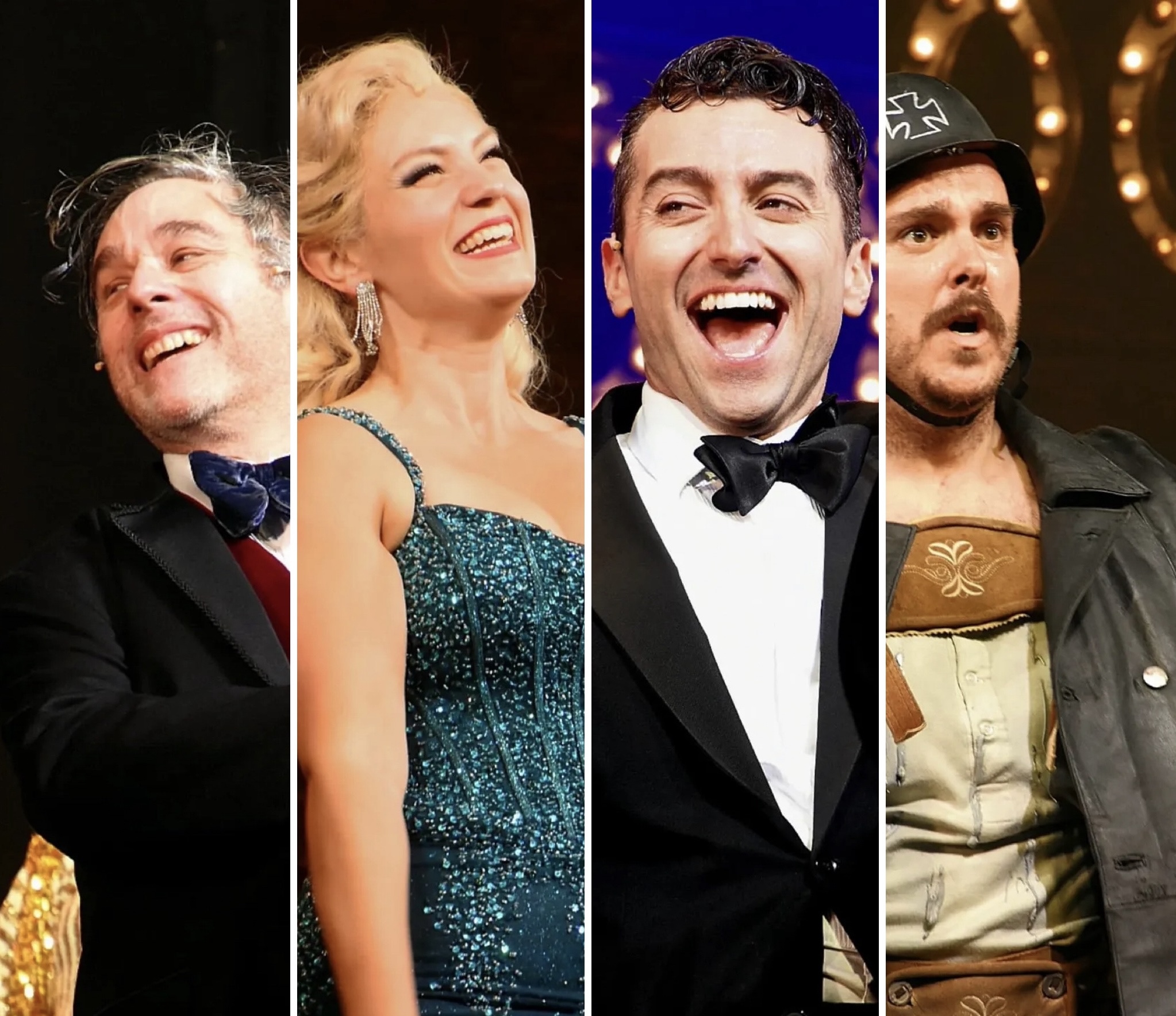
Andy Nyman, for instance, is no Nathan Lane. While that may sound like an insult, and comparison to Lane, or to original Max Zero Mostel, would be the highest compliment, there’s an individually to Nyman’s take on the role that breathes new life into the character. The crude “standing ovation” line following Swesih bombshell Ulla’s audition stood out to me as being delivered differently in both tone and pacing to Lane, and works as a wonderful example for how he and Marber have found a new way into the character. Likewise, Marc Antolin finds his own levels of frantic energy for Leo, doing an impression neither of Matthew Broderick or Gene Wilder, but dialling up lines more than either did and inserting his own sense of personality into the nervous dialogue he’s been given. Both, of course, accompany their acting with strong, characterful voices which extend their characterisation beyond the dialogue scenes and throughout each musical number.

photography by Oviya Thirumalai (@minnale_photography)
In a throwaway role that became much-expanded when first adapted for the stage, Joanna Woodward is sensational as Ulla, more than ready to take on the introductory scene in which she must be an immediate quadruple-threat – a singer, actor, dancer, and sparkling comedian. Charmingly overdone accent at the ready, Woodward brings real heart to Ulla’s love story with Leo, and the awkward chemistry created between her and Antolin is hilarious. Another star turn comes from Trevor Ashley as fabulously flamboyant director Roger DeBris – if you know the show, you know what the glorious centre-piece of his performance is, but there are constant laughs to be found and new touches to be mined from the role, and Ashley leaves not one comedic stone unturned.
The entire company are extraordinary, with Raj Ghatak’s Carmen Ghia and Harry Morrison’s Franz Liebkind rounding out the principle cast with a pair of brilliant supporting performances, each nailing some of the best-loved lines and delivering spectacularly during their musical numbers. Beginning as ushers and eventually asked to play patrons, little old ladies, even a bare-naked statue, the ensemble are a well-oiled machine and an absolute joy to watch. In the sole number to come from the original film, the catastrophically camp “Springtime For Hitler,” the whole group hit every beat, every note, and every single punchline. Bialystock & Bloom’s plan is to mount a surefire flop, but what we see of their cash-cow production is the biggest crowdpleaser of a fantastic night at the theatre.
The Producers has firmly cemented itself as a classic work of comedy – despite mixed reviews on its release, the film has gone on to critical acclaim, and won an Oscar for Brooks’ screenplay. Some felt that the story of two Jewish men mounting a campy musical about the life of Adolf Hitler, such a short time after the end of World War II, was perhaps in poor taste and difficult to get on board with. Experiencing this fresh but faithful production, I felt assured in my assessment that this isn’t a shortcoming of the material, but very much the point. Mel Brooks, a Jewish writer and director, created a pair of Jewish characters whose efforts to produce a flop bring them uncomfortably close to a real-life Nazi, and lead to their making Hitler the laughing stock of the season. It’s broad, it’s ridiculous, and it’s almost certainly deliberate.
Outfitted beautifully by Paul Farnsworth, whose ill-fitting suit for Max’s introduction tells us everything we need to know about his career, Leo & Max and back and perhaps better than ever in this new West End production. If you loved the film, the other film, or the original run of the musical, you’re guaranteed to find joys both old and new is this production, and find yourself humming songs I can only hope you don’t begin to sing aloud on your commute home. Some would say if it ain’t broke, don’t fix it, but I think Ulla Inga Hansen Benson Yansen Tallen Hallen Svaden Swansson (“Do you want to hear my last name?”) said it best: “When you got it… flaunt it!”

Rating and final thoughts
⭐️ ⭐️ ⭐️ ⭐️ ⭐️
Sensational. Hysterical. Timeless.
As I said, this may be the best that The Producers has ever been. Patrick Marber and co have found the right balance of careful reverence and joyful inventiveness to make something equal parts nostalgic and current. Broadly funny but with some brilliant subtleties to be found, the audience the night I attended were in stitches by the climactic sequence, and I can’t imagine finding a bad word to say about this production. A real treat for West End audiences, with a stellar company who elevate the already strong material – add in a classic vocal cameo from Mel Brooks himself, a holdover from the original film, and what more could you ask for?

Header image from the shows official photography, captured by Manuel Harlan

 Sam Waite - Writer & Reviewer
Leave a comment