What’s the story?
Phoebe and David return home from a new production of a classic Edward Albee play with her having a lot to say about it. She’s a well-known critic with notoriously harsh opinions, and he’s her psychotherapist fiancé who she soon learns, to her horror, liked it. Soon enough their debate descends into deeper, more personal topics, and by the end of the night its their relationship, and not the production of Who’s Afraid of Virginia Woolf, which seems in danger of closing early.
Where did it play?
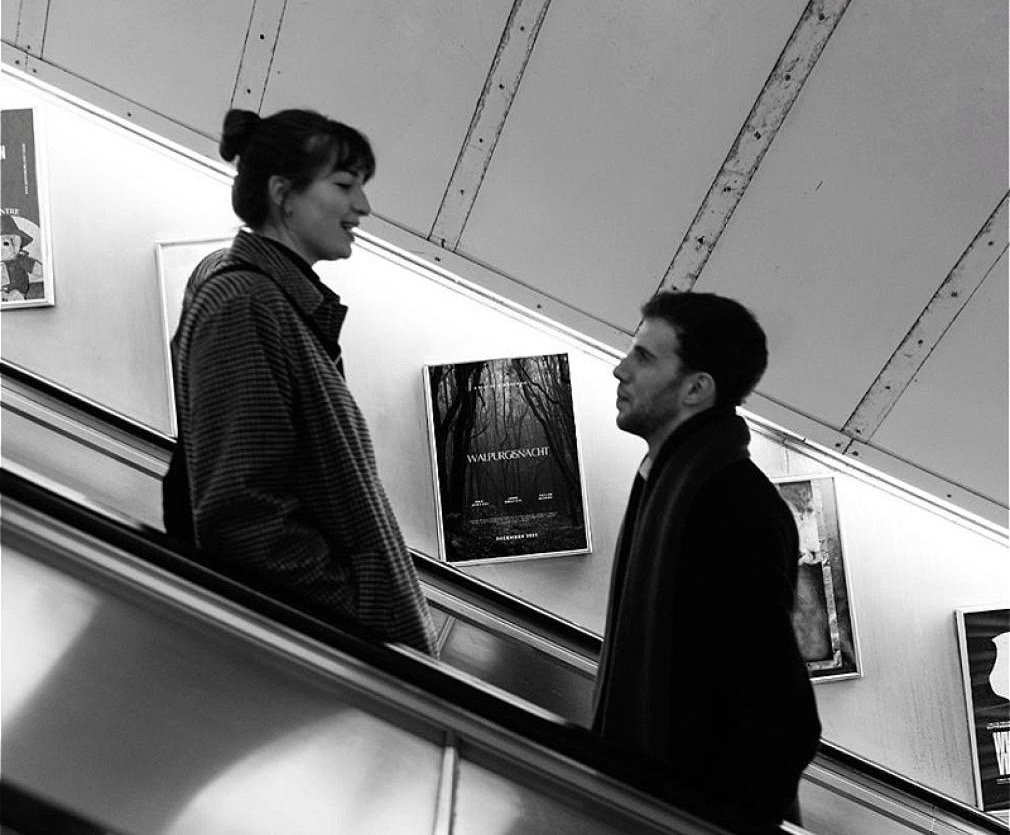
val-POOR-giss-nakht played at Camden People’s Theatre from December 16th to December 20th
To stay up to date with future productions follow Zubis Productions on Instagram
This review was written at the request of Zubis Productions, who kindly invited me to attend.

Spoiler-Free Thoughts
Art about artists can be risky, and theatre beginning with theatre criticism as a central point riskier still. Early on, David throws a curvebll into their discussion, asking when the last time Phoebe actually enjoyed a show was, and whether she’s just determined to find the bad in everything. That kind of bluntness is admirable, and serves a deeper purpose than simply calling out those writers who seem determined to tear new productions to shreds, but also introduces us to Phoebe’s backstory – chiefly how she came to spend her time analysing the work of others while her own play sits unfinished and her auditions have long since ended.
Playwright Lyndsey Ruiz, who also plays Phoebe, is unafraid to show us the most infuriating traits of her character, as well as to give a clear view of her shortcomings both personally and professionally. Mid-conversation, David raises a point about a character’s emotional state and history and is shot down as bringing up something irrelevant, seemingly because it explains away a snide remark Phoebe wants to add to her review. Ruiz draws both characters clearly and in enough detail that we immediately know who they are, while leaving plenty about what makes the tick to introduce and expand on over the hour-and-change we spend in their company.

With characterful touches to the pair’s flat – playtexts of hers, self-improvement tomes of his, a toy Paddington we soon discover was likely a gift from her stint at The Paddington Experience – director Andrew Darren Elkins use the People’s Theatre space wisely, created the illusion of a spacious living room within the intimate auditorium. Elkins has his cast step beyond the playing space, not only creating the idea of further rooms in the theatre’s bar space, but having them enter through the audience to imply further space there also. He also proves adept at guiding the duo through the careful emotional balancing act the characters must go through, and finds the right moments to introduce more melodrama or else more stillness into the work.
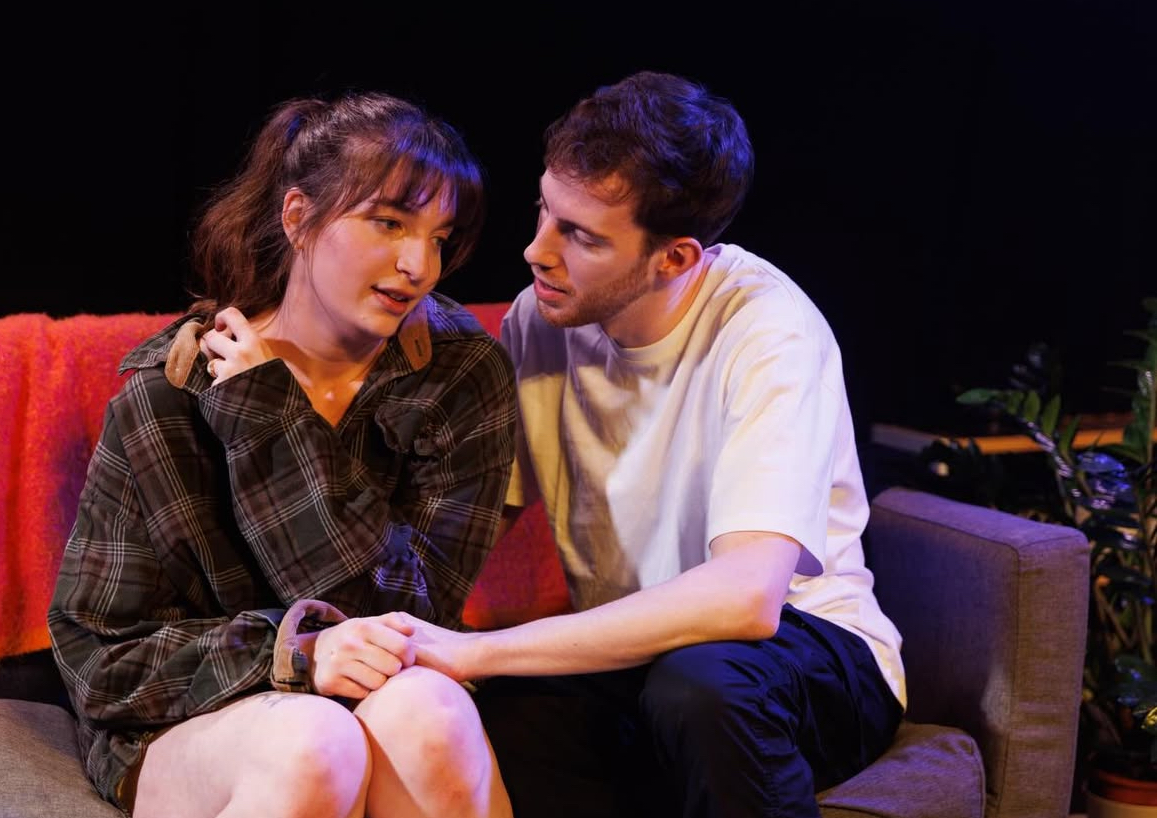
Jordan Fietta plays David with a calmness and patience that suggests the character’s approach to his sessions with patients, and allows thee long-ignored emotions to launch directly to the surface in thrillingly believable outbursts. At once point tears well in his eyes an instant after his serene exterior has broken, and it’s these quiet but expressive moments in which his full range as a performer is revealed. Wearing her frustrations on her sleeve for much of the performance, Ruiz also finds a quiet power in such moments, when we find that his calmness and her brashness were both covers for how delicate their emotional states are, and how close their courtship has long been to coming to an abrupt end.
A particularly strong directorial touch that works beautifully with Ruiz’s script is a rapid-fire back and forth, played exactly as one would expect a play like Who’s Afraid of Virginia Woolf to be performed, and harking back to an early moment in val-POOR-giss-nakht. David and Phoebe lob their lines back and forth, in a verbal tennis match which is endlessly watchable, and which both actors manage to sell the emotions behind even with their breakneck pace. With this play fulling its title from the second act of Albee’s classic work, this homage is more than welcome and nicely handled.
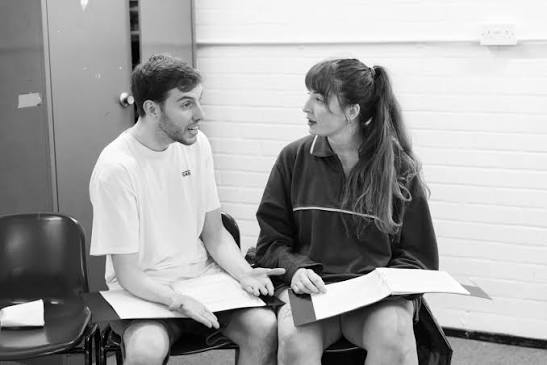
In the always-welcome (and necessary, frankly) role of intimacy coordinator, Lawrence Carmichael has shaped some steamy moments, and proves invaluable as these encounters develop into rich, complex discussions around parenthood and the expectations of their relationship. Alongside Slkins and assistant director Nick Hyde, Carmichael has helped to create a vibrant, believable relationship, and to ensure that both these sensual moments and those where the pair are most at odds feel believable, genuinely emotive, and yet the safety of the actors is never in question.
A small-scale production which could easily be moved as is into all manner of spaces, val-POOR-giss-nakht has a lot to say, and manages to say it all in what seems at first to be too brief a time. Both able to clue the audience into the characters’ history and willing to allow their own assumptions to fill in any gaps left, Ruiz has paid tribute to classic work while keeping completely to her own vision, and with the help of Elkins as her director, has crafted something affecting, moving, and likely to spur discussions as lively as the one that begins Phoebe and David’s evening.
Final Thoughts
⭐️ ⭐️ ⭐️ ⭐️ ⭐️
Intimate. Provocative. Fearless.
val-POOR-giss-nakht is a thoughtful, contemplative piece of theatre which opens up lively discussions about the state of the theatre, the fragility of the central relationship, and how each of us processes and puts aside those things which have caused us pain. With two strong actors at its heart and a genuine understanding of the kind of plays it seeks both to comment on and to emulate, this is a show I truly hope to see more of in the future.
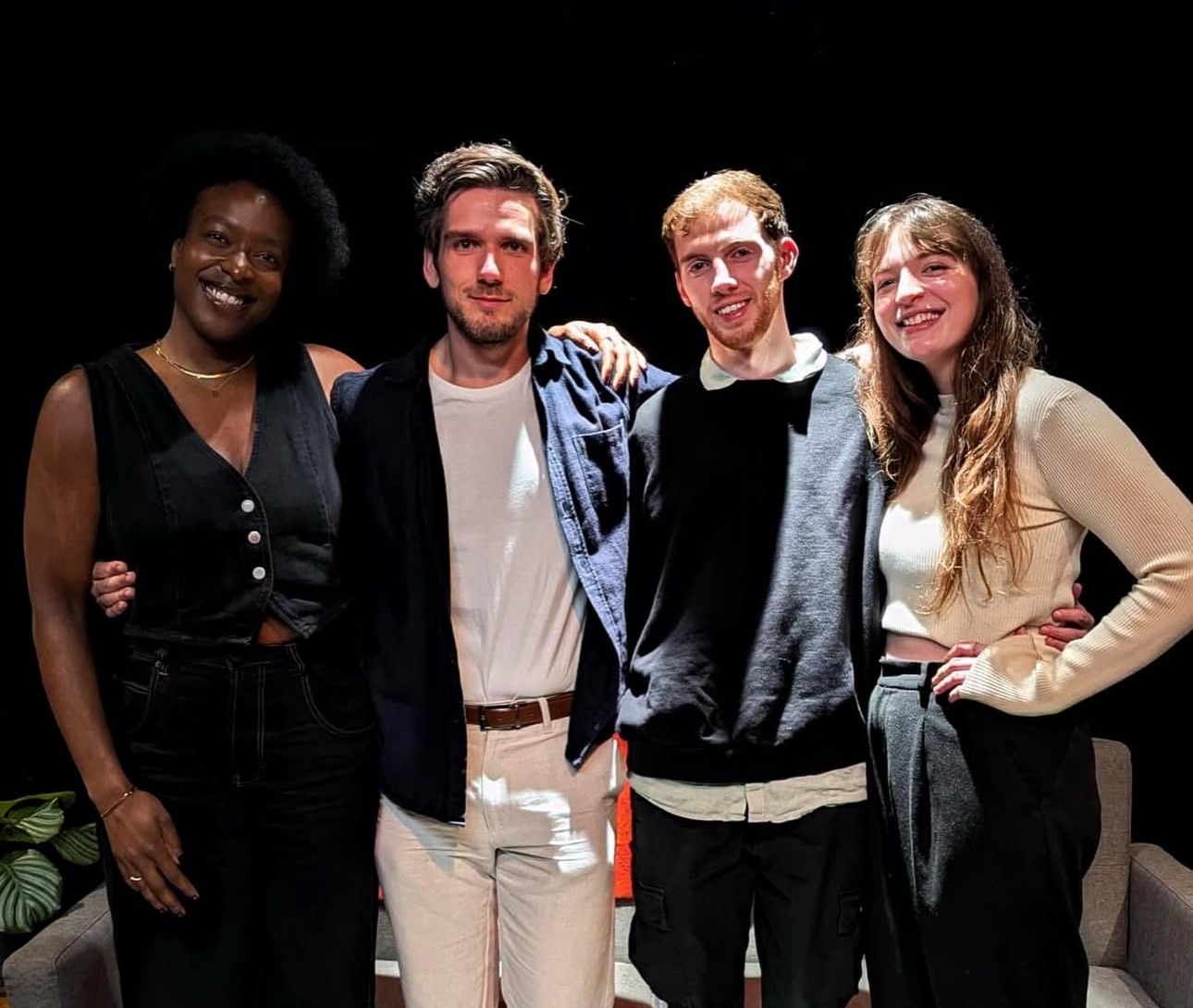



 Sam Waite - Writer & Reviewer
Leave a comment