What’s the story?
An awkward but invigorating love story which devolves into a heartfelt examination of how grief can impact two lives, both shared and individua. Introverted Rupert and brash provocateur Alex connect on their daily commute, leading to a life together punctuated by compromises, conflicts, and the loss of the baby they never got to raise.
Already an Offie-winning play, this new production at The Cockpit provides an intimate experience which promotes thought, feeling, and a startlign reminder of life’s fragility.

Where is it playing?
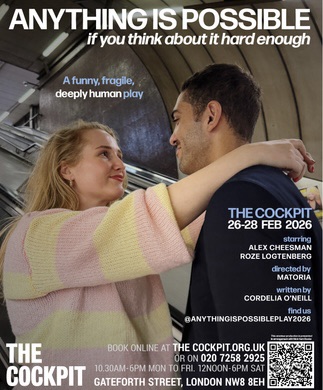
Anything Is Possible If You Think About It Hard Enough plays at The Cockpit until February 28th 2026.
Tickets and information can be found on the theatre’s website.
This review was written in exchange for a complimentary ticket, provided by members of the production.

Spoiler-Lite Thoughts
Spoilers are, you quickly find, baked into the play’s structure and promotion. While it’s stated upfront that the production deals with stillbirth, grief, and the aftereffects of such an event, this doesn’t actually occur until the midway point. Instead, Cordelia O’Neill has written a story of two halves – a fumbling, awkwardly charming love story leading to the late stages of a pregnancy, and the aftermath in which the relationship and its participants must find a new equilibrium after their loss.
As a rule, I’m wary of an interval when the running time is 100 minutes or less. Yes, the option to run to the toilet is always welcome, but there’s always a concern that the narrative structure doesn’t call for it, that the momentum would be better served by soldiering on. Here you could debate either way, but despite the second act starting exactly where the first left off, there was a clear division of themes and ideas that may not have made an interval necessary, but certainly gave it an impact.
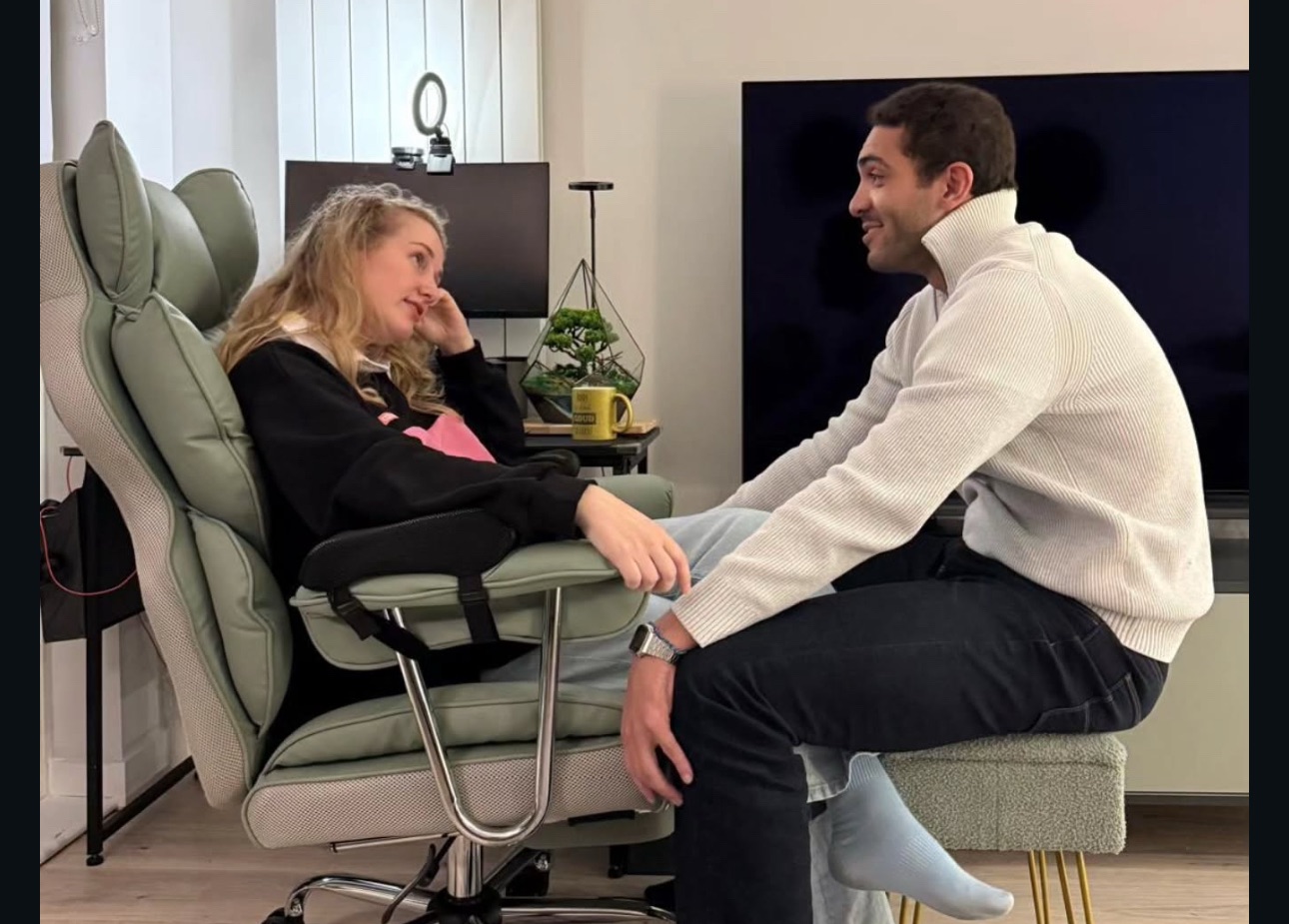
The duo of actors arguably dominate an act each, their character being posed as narrator for the disparate sections. Anchoring the first half as mummy’s-boy Rupert, Alex Cheesman radiates awkwardness and social ineptitude, making it apparent from the first moment why Rupert hasn’t found someone yet, and why Alex would fall head over heals for him. His narration keeps a winning, humorous quality through that first act, and he does a terrific job getting across a more quiet, suppressed grieving in the second act.
Roze Logtenberg has to walk a fine balance in Alex’s early scenes, where her bluntness and more outlandish qualities need to not overwhelm her likability. After pulling off this task, she develops enough genuine chemistry with Cheesman that we never lose sight of why the pair have fallen so hard for one another, and offers a lot of humour to their still-growing relationship. In the second half, Logtenberg allows the likability to fall away as she brings genuine passion and emotional depth to Alex’s compulsions to hurt those around her as she has been hurt, crafting a powerful and passionate performance as a woman consumed by her grief.
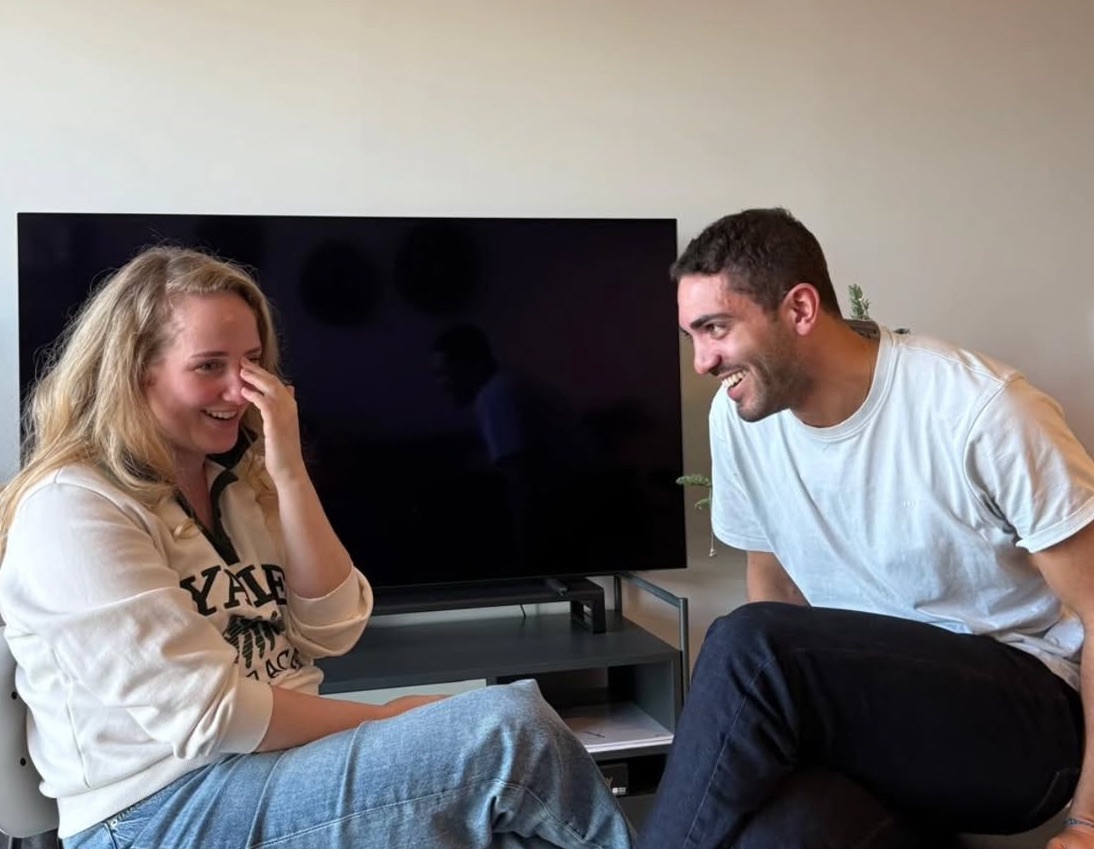
Logtenberg and Cheesman do a wonderful job of bouncing off of one another’s energy, and while each has individual moments of greatness they shine brightest when fully immersed in a scene together. Both performers have mined the parts for their most affable and most off-putting qualities, and the effect is a genuine and entirely believably courtship which evolves into a fully realistic longterm relationship. When they are at odds and real frustration blossoms between them, this is all the more affecting for how well the two have succeeded in meshing these disparate personas.

Multi-hyphenate creative Matoria has taken the reigns as director for this short stint at The Cockpit, keeping the piece controlled and ever-moving towards its goals without too staged or unnatural an effect. Throughout the performance, pieces of their life together, in particular of Alex’s impact on Rupert, accumulate around an invisible border, perhaps representing the couple’s insular world together and demonstrating that their eventual grief is something which must remain contained to only their lives. Matoria’s work keeps a brisk pace to the proceedings, and her blocking in early scenes lends itself well to the plot, their being further apart and more visibly separated, making the constant closeness and presence in one anothers space later on more noticeable and impactful.
Admittedly, the initial narration-scene-narration-scene structure can detract from the storytelling, it feeling a shame when the dialogue ends and we wait to see what comes next. But this does serve a purpose which is revealed later, when we discover quietly for whom Rupert is narrating. There are minor tweaks which could have made the show, whether the play itself or this production, that bit closer to perfect, but it would be unfair to deny that the current form is still a wonderful experience, and a richly emotional one at that.
Anything Is Possible is a play whose heart is worn entirely on its sleeve, and those involved in this production show such a clear passion and understanding of the material that it’s easy to forget Cheesman and Logtenberg are playing characters. In a welcome final moment, the actors sit facing away from the audience, their bows already completed as a projected memorial, “to all the babies that live in the stars,” is rightfully given full and final attention. It’s a stirring moment that represents what has come before it – a powerful, well-shaped work whose performers lend themselves beautifully to powerful messages of life going on, and of the importance of letting your grief be felt.
Final thoughts
⭐️ ⭐️ ⭐️ ⭐️
Heartfelt. Heartbreaking. Hopeful.
Anything Is Possible If You Think About It Hard Enough is an important reminder that everyday stories needn’t be as repetitive as calling them everyday may suggest. This is a play which tackles a reality so many will have to live with, which so many do every day, and the work is so much more powerful for its refusal to sensationalise this reality, and its willingness to sit within that uncomfortable but unavoidable truth.


 Sam Waite - Writer & Reviewer
Leave a comment