Sometimes one genre simply isn’t enough for one story – and musicals, like animation, are posited most often as a genre themselves despite really just clarifying how the story will be told. Yes, it’s a musical so they’re going to sing… but does calling it a genre of film, theatre or television suggest larger similarities between Singin‘ in the Rain and Les Misérables?
Obviously the term “musical comedy” has also been thrown around to describe objectively lighter fare, and I’ve seen “musical drama” a fair amount, but for so long I was confused by the delicate balance between the two. As I got older and started to research both the mediums of screen and stage and the stories they were being used to tell, I was relieved to see phrases like “is a fantasy-comedy musical” or “this sci-fi musical” and eventually found a genre that has increasingly resonated with me: The Horror Musical.

An example many theatre fans will be aware of, for the initial failure if nothing else, is Carrie – the ill-fated adaptation of Stephen King’s first novel. Both the original, less successful version and the revamped, more widely accepted update of this show used the tradition musical theatre elements – the non-diegetic singing, the choreographed dancing – to tell what we all know to be a horror story. Using Carrie as a starting point, I wanted to discuss a few musicals whose use of elements from both genres I find interesting. (All movie musicals this time around, because they’re what got me thinking about the subject)
Little Shop of Horrors – 1986

An interesting example, this film was adapted from the 1982 stage musical, itself a loose adaptation/parody of Roger Corman’s original 1960 film. A B movie from the outset, Corman’s The Little Shop of Horrors‘ shoestring budget and three-day filming schedule resulted in something campy, ridiculous, and ultimately easy to give the off-Broadway treatment – and so with the dentist and workplace-romance subplots combined, the hypnosis sequence out in favour of establishing personal motives for each of Seymour’s killings, and a trio of “Urchins” named after girl-groups inserted as narrators, Menken and Ashman’s Little Shop of Horrors was born.
A still-popular choice today, recently seen in a colourful Sheffield Crucible run, a new film version has been rumoured for many years, with stars including Scarlett Johansson and Taron Egerton supposedly attached, while an off-Broadway revival has seen the likes of Jeremy Jordan, Sarah Hyland, Darren Criss, Evan Rachel Wood, Corbin Bleu and Jinx Monsoon take on the roles of Seymour and Audrey. Perhaps part of why a new film has yet to materialise is that the 1986 version largely holds up, particularly thanks to the inimitable Ellen Greene reprising her New York and West End performance as Audrey. True, the film adaptation of the musical adaptation of the original film does away with the harsher tones of the finale… but for the most part it just really, really works – not by any means scary, but certainly an exciting and elating take on the story.
How is it horror?
There’s a literal monster in the form of Audrey II, and the storyline – changed though it is – is built around the foundations of Corman’s original horror-comedy film. Horror can be conceptually scary without actually being upsetting to the viewer, and I’ll die on the hill that an alien species of plant compelling mild-mannered store workers into helping them eliminate the human race fits the bill!
Repo! The Genetic Opera – 2008

Just as campy and over-the-top if not nearly as deliberately unserious, Repo! was brought to the screen by Saw-franchise veteran Darren Lynn Bousman, assembling an eclectic ensemble for this gory update to the little-known 2002 stage piece. Set in a near-future where mass organ failure ended life as we know it, this Genetic Opera‘s world is kept going by GeneCo, a biotech corporation who offer artificial organ replacements for a monthly fee – and if you can’t keep up the payments, one of their Repo Men will be sent to retrieve GeneCo’s property…
And so our cast of characters find themselves in this grim, sci-fi horror soundscape, with almost all dialogue sung and frankly too much else about this world deeply unsettling for it to be worth questioning. The cast span former child-stars (Spy Kids‘ Alexa Vega), veteran actors (Anthony Stewart Head, Goodfellas‘ Paul Sorvino), industrial musicians (Nivek Ogre of Skinny Puppy), classical crossover artists (Phantom‘s OG Christine, Sarah Brightman), and determined reality stars (Paris Hilton, initially refused by producers but so determined that she had sides smuggled to her in prison). A particularly violent rock opera, Repo! is perhaps the rare case where a movie musical’s horror elements are placed front and centre, with the comedic touches a supporting element rather than softening the harsh edges.
How is it horror?
It’s bloody, it’s brutal, and it’s filled with scenes where characters fear for their safety, often their very lives. The Repo Men are a chilling concept in a world where your body parts are on loan, and Repo! point blank refuses to avert its eyes from the visceral outcomes. Factor in the director’s pedigree and the cruelty of several characters, and it’s difficult to argue that this isn’t a horror film.
Anna and the Apocalypse – 2017
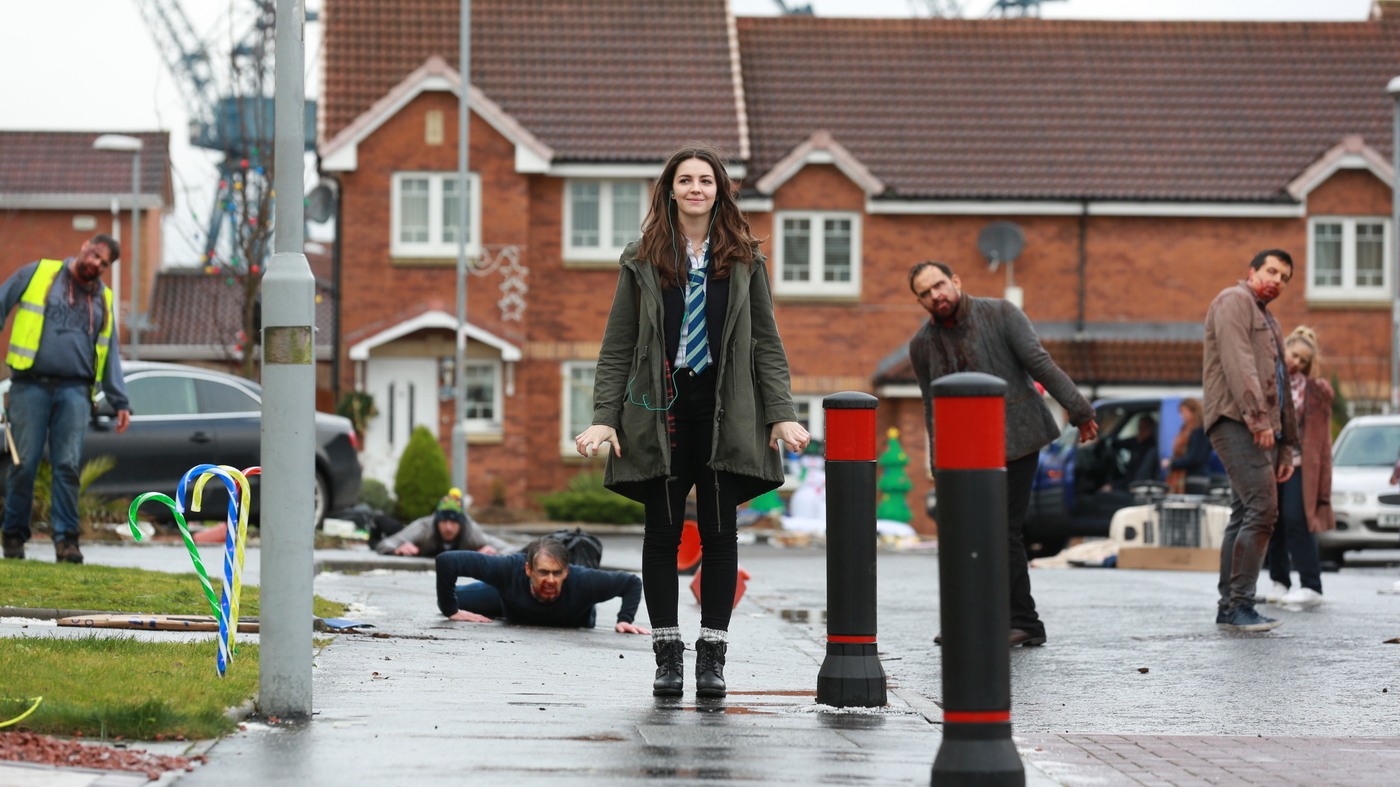
Many of us have wondered how we might approach a zombie apocalypse – whether we would fight or flee, where we might go, what our priorities in an end of the world scenario might be. Rarely, I’d assume, have any of us considered what time of year it might be taking place, or whether any major holidays might be impacted. Anna and the Apocalypse, a British film building on 2010’s Zombie Musical, finds a small Scottish town terrorised by the undead right before Christmas, and follows a group of sixth form students as they try to make their way back to the school to reunite with their parents, trapped in following a winter talent show. If Repo! combined the musical genre with sci-fi and body horror, John McPhail’s Anna answers with a Christmas zombie musical with plenty of jokes despite some genuinely high stakes.
Cast largely with then-unknown talent, only two out of the six primary actors in Anna and the Apocalypse have Wikipedia pages eight years after the film’s release, and the effect is that we can believe so much more easily that they are ordinary teenagers. Much of the film’s levity comes from upbeat songs which deliberately clash against the bleak surroundings – from the knock-off High School Musical track “Hollywood Ending” to action-man boast track “Soldier at War.” It’s mostly the kids doing the singing and dancing, because if there’s one thing Heathers and Mean Girls have taught us, it’s that teen angst is a solid pathway into the “feelings so strong they have to sing” approach to musical theatre.
How is it horror?
A teen movie with coming of age elements, a deranged headteacher more concerned with order than with lives, and Christmas day fast approaching, Anna and the Apocalypse never forgets its position as a high-stakes zombie movie. Honestly, a lot of the interpersonal stuff between the teenage characters falls by the wayside when they must unite to battle their way back to the school, allowing for the more tragic moments to break through the onslaught.
But are there many others?
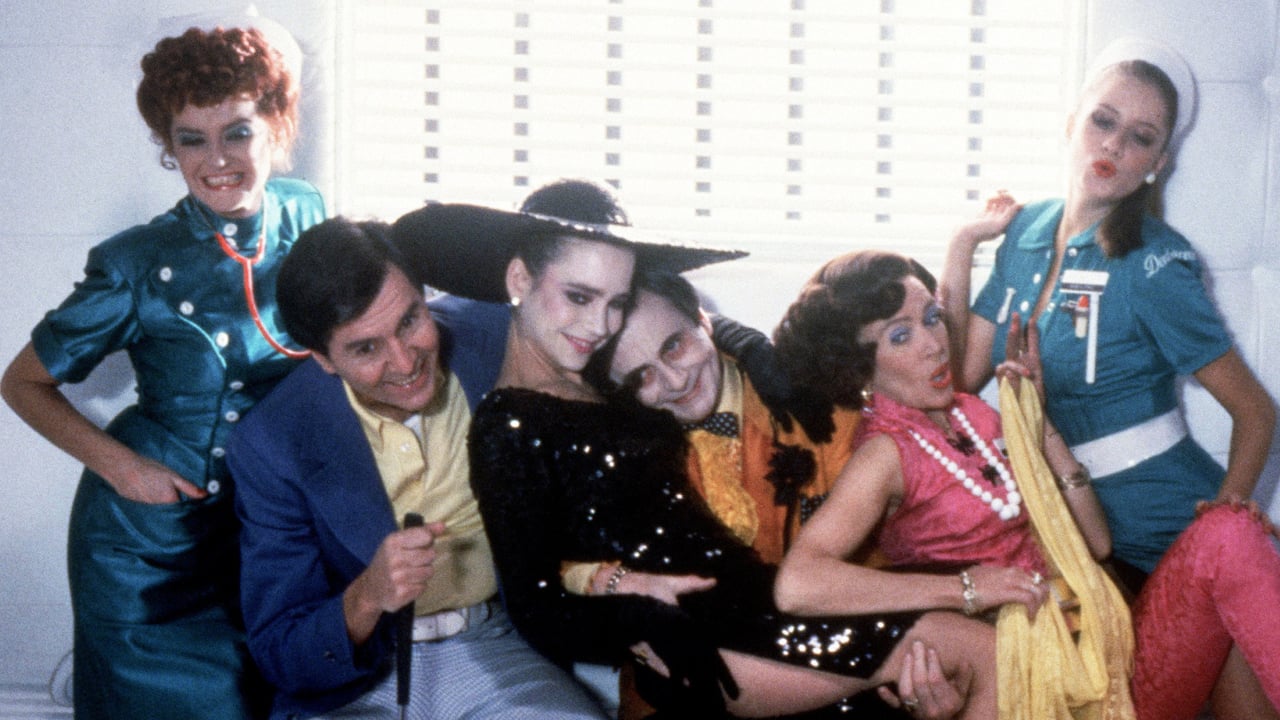
That, I’m sorry to say, is a question I’m only so equipped to answer. There are the more obvious choices, Sweeney Todd, Rocky Horror and its arguably more conceptually frightening followup, Shock Treatment, even animated fair like Corpse Bride has hall marks of the horror and musical genres. Then there’s the more openly mocking but also more overtly musical, like 2014’s summer camp slasher Stage Fright, and films about people who sing rather than where they burst into song, such as Brin De Palma’s Phantom of the Paradise.
How populated you find the horror-musical subgenre to be also hinges on what you allow as horror, and for that matter as a musical. If you consider music being deeply embedded in the storytelling if not always used purely to move it along, Ryan Coogler’s Sinners would certainly qualify, whereas Luca Guadagnino’s 2018 take on Suspiria has no singing featured but its reliance on dance and the accompanying score could qualify it as a “musical” the way Dirty Dancing and Footloose often find themselves included.
All of this is to say that I haven’t a clue how deep this merging of storytelling concepts runs, nor do I claim to be an expert on the matter. Still, hopefully some will have been introduced to a new movie, even just a new concept in how stories can be told, and fingers are tightly crossed that some kind soul will be able to share their horror musical of choice with me – albeit possibly with an essay-length message explaining what, to them, constitutes either genre.
Title credit: A riff on the song “If You Feel Like Singing, Sing” as performed by Judy Garland in the movie Summer Stock

 Sam Waite - Writer & Reviewer
Leave a reply to Unbound: Alive in Concert – Cast Album Preview – Sam Waite – Writer & Reviewer Cancel reply