What’s the story?
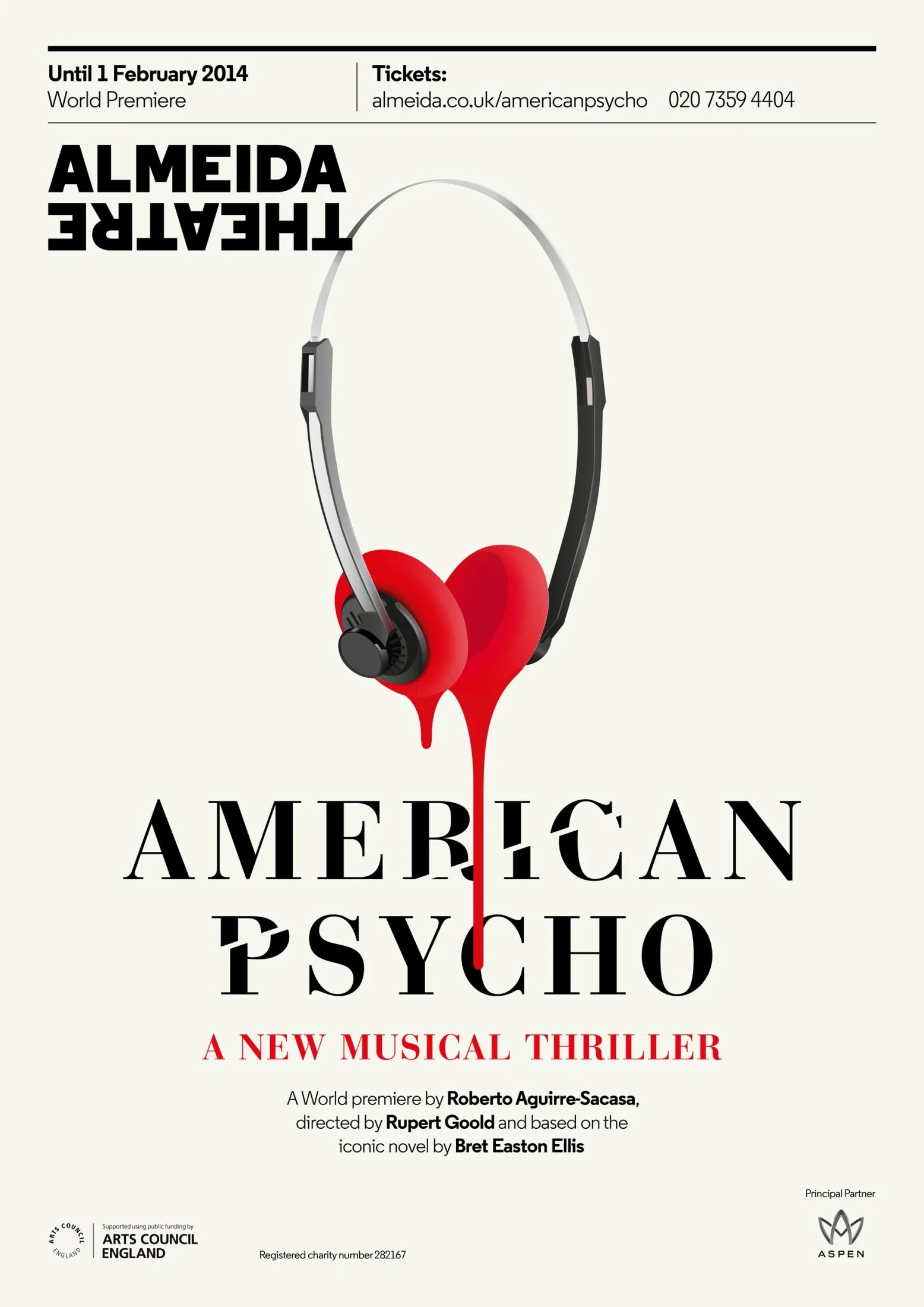
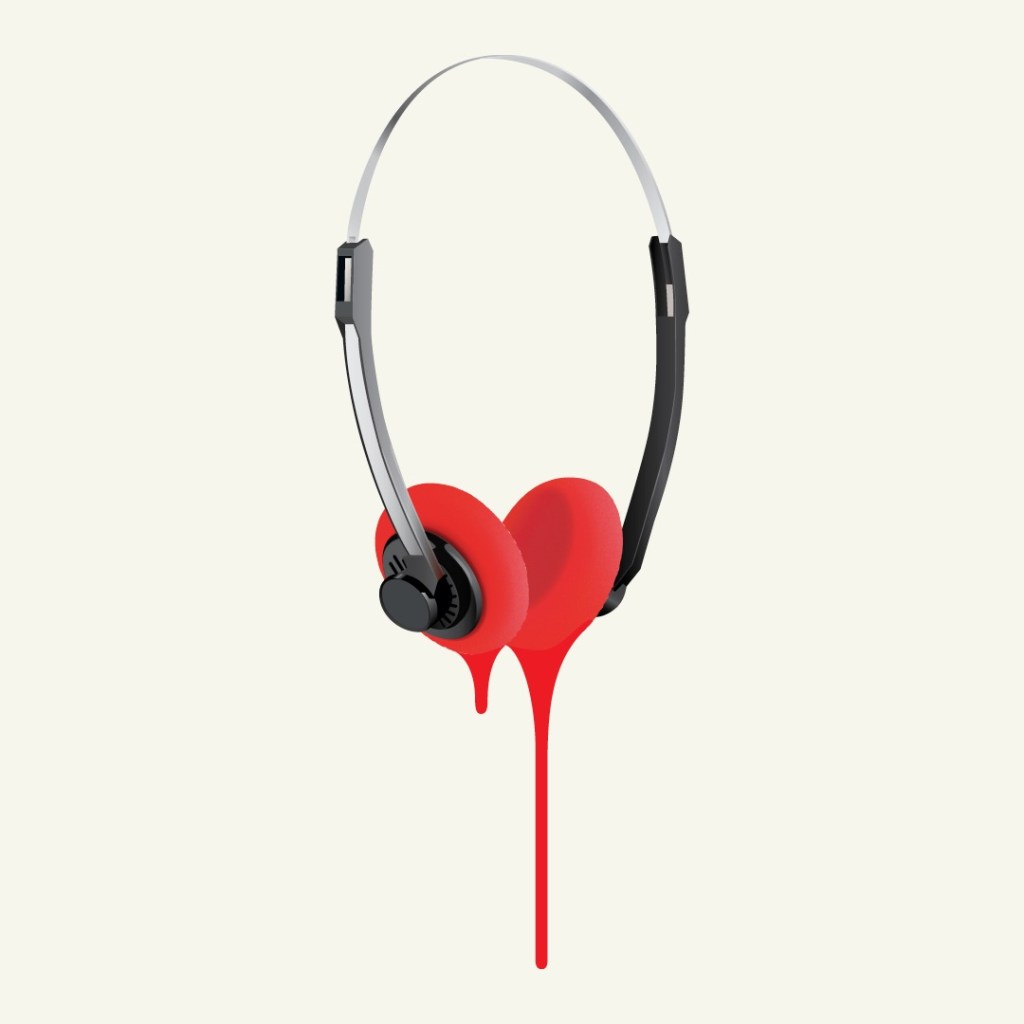
Patrick Bateman is the quintessential 80s yuppie. He’s young, he’s handsome, he’s successful, and he’s a mass murderer by night… or maybe not. Even Patrick seems unsure of who or what he is, but it’s through his lens that we see this electro-pop-inflected world. Due to take over as artistic director of the Old Vic, Rupert Goold rounds out his tenure at Islington’s Almeida Theatre with a revival of American Psycho, the musical adaptation of Bret Easton Ellis’ controversial modern classic.
Where is it playing?
American Psycho plays at the Almeida Theatre until March 21st 2026
Tickets for the final shows are sold out, but information and any last minute returns can be found on the theatre’s website
This review was written of my own volition, having paid to attend a performance earlier this month.
Spoiler-Lite Thoughts
To fully avoid spoiling American Psycho feels like a losing battle, so ubiquitous are moments from the story. In particular, Mary Harron’s Y2K film adaptation is such a film-bro classic that it’s easy to forgot that not everyone is familiar with Patrick Bateman’s dubious killing spree. For those uninitiated, the stage version of American Psycho is a stirring piece surrounding a commanding, deliberately-blank central figure. Having both seen the film and read Bret Easton Ellis’ novel, I was struck by how well the atmosphere translated not only to the stage, but specifically to musical theatre.
Written several years before he became best-known for developing and showrunning Riverdale, Roberto Aguirre-Sacasa’s book shows a vivid understanding of the material, and a great deal of skill in crafting his own version. Select moments are taken verbatim from earlier iterations, while new dialogue keeps the vapidity of the “serious” conversations as a central focus, creating a sharp contrast with Patrick’s self-perceived intelligence and wittiness set against those surrounding him. The world as seen by Patrick Bateman is always bleak, and Aguirre-Sacasa is well aware of this, with even his broadest jokes being those where Patrick is oblivious to his presumed audience laughing at him.
Beautifully, as in Ellis’ novel and Harron and Guinevere Turner’s screenplay, it is for the audience to decide if the supporting cast are hearing something different to the viewer, or the group are merely too self-absorbed to listen. Patrick offers girlfriend Evelyn a necklace made of his co-worker’s fingers, and she chirpily replies that one of these fingers had better bear an engagement ring – a masterful moment not only from Aguirre-Sacasa’s script, but from Emily Barber’s performance.

L-R: Arty Froushan, Emily Barber & Oli Higginson
Barber’s sharp turn as Patrick’s impossibly vain girlfriend comes as part of a pitch-perfect ensemble, paired initially with an equally strong Tanisha Spring, as Evelyn’s best friend and Patrick’s illicit lover, Courtney. The pair bring comedic flatness and strong vocals to early number “You Are What You Wear,” and both sell the hell out of the characters’ indifference to actual decency. Courtney calls off their affair largely because it could interfere with her life goals, Evelyn wants the very best simply because it’s the very best, and both performers get across their characters’ self-serving with a delicious lack of irony.
80s misogyny (it’s pretty identical to 2020s misogyny, actually) is rife in the world of Patrick Bateman, so he is of course surrounded frequently by men of a similar stature. The group are all strong in their portrayals, with Zheng Xi Yong’s closeted Luis Carruthers and Oli Higgingson’s coke-fiend Tim Price having some real standout moments. Higginson is great fun as the longtime best friend who serves to remind us how little is truly unique about Patrick, while Yong is tremendous as the lovestruck colleague who instigates a combination of gay panic and that classic bloodlust in our protagonist.
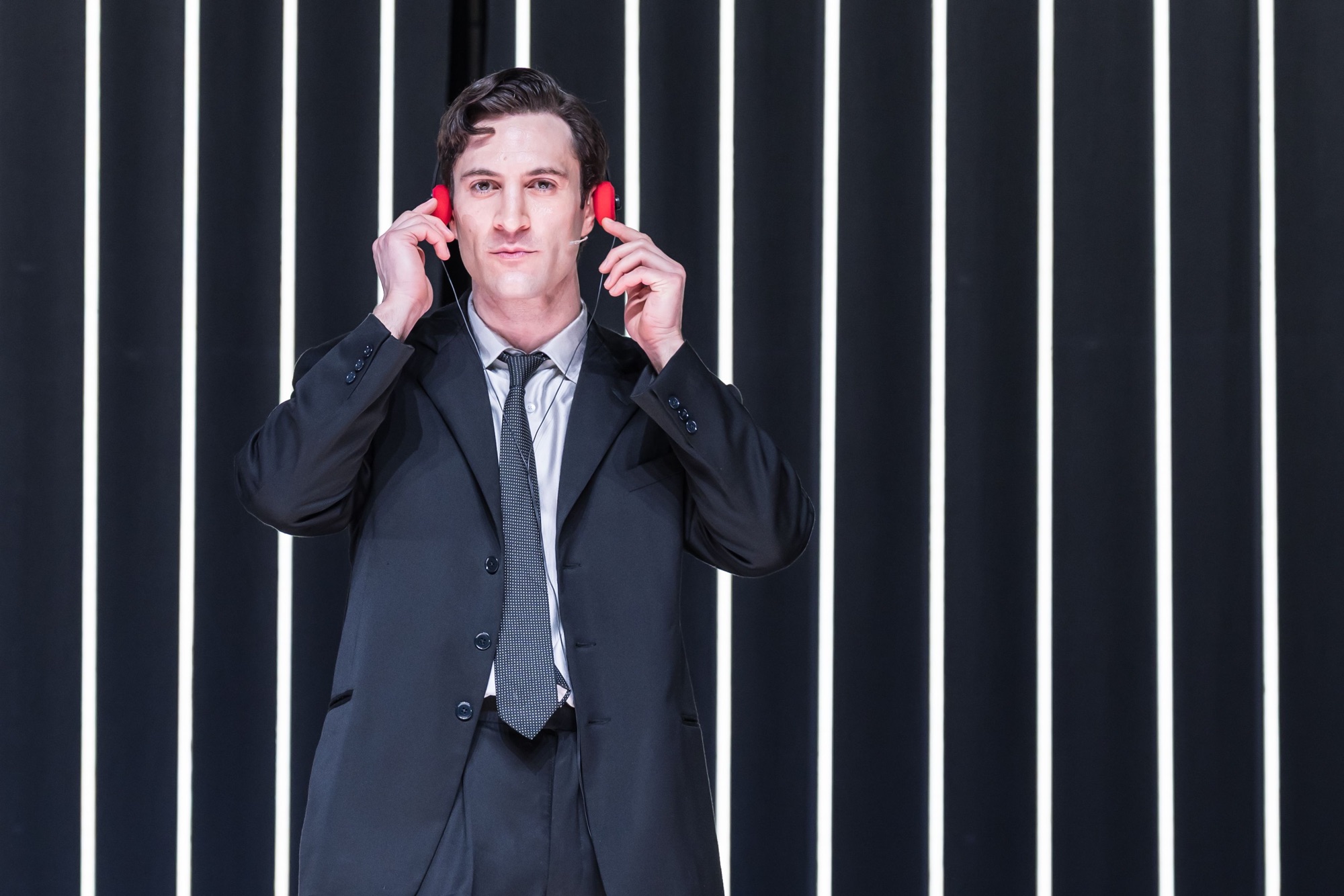
Meanwhile Paul Owen, the more successful colleague who sparks Patrick’s murderous insecurities, is performed with a fitting blend of bravado and camaraderie by Daniel Bravo. Bravo makes Owen as irritatingly smug as he ought to be, but allows just enough touches of humanity that his inevitable death carries at least a hint of tragedy. This moment is, of course, a real turning point in Arty Froushan’s outstanding performance as Patrick Bateman, allowing him to drop the already-unravelling calm that exists throughout his act one performance. Veering increasingly into the character’s mania, Froushan’s most powerful moment comes at the curtain call, when warmth and humanity seem to slam back into his body, highlighting just how effectively he has descended into such a cold and detached character.

L-R: Xheng Xi Yong, Tanisha Spring & Daniel Bravo
A final credit must go to Anastasia Martin, who brings a genuine warmth and compelling gentleness to secretary Jean. With Jean the only character we see as truly human, owing to Patrick’s own view of her as morally better than those he surrounds himself with, Martin may seem at a disadvantage being asked to play a role so different from the rest of the ensemble cast. However, she ably navigates the cruel, barren world she has been placed in, finding where Jean fits within this darkness and bringing a refreshing light to her scenes, alongside bright, soaring vocals.
Duncan Sheik’s songs are often uncomfortable. It’s not that the content is as graphic as Ellis’ original text, but that the electronic score feels designed to get under listeners’ skin, to leave them unnerved and serve primarily to enhance the tone and themes of the wider show. This is a wise choice, as little about the world of American Psycho calls for sweeping ballads or charming ensemble numbers – the ensemble here are vapid and self-serving, and so too is their musical presence. Jean has a lovely act two number in the shape of “A Girl Before,” a gentler song which reaffirms that Jean does not belong to the cruel world we have been welcomed into.
That’s not to say there are no earworms, with opener “Selling Out” having some catchier moments, and “You Are What You Wear” being endlessly quotable. With the latter in particular, it’s truly striking to see an elaborate choreographed number whose very point is the insipidness of its lyrical content. Evelyn and Courtney are painfully serious about the importance of their attire, and their flat, hyper-serious delivery works beautifully as a foil to the similarly-stupid content of “Cards,” in which Patrick’s colleagues are incensed by the stock and font choices of business cards. If one moment can summarise the writing’s, from both Sacasa and Sheik, view of these characters’ ludicrousness, it would likely be the early line where one co-worker insists they refocus on something genuinely important, like where they should make reservations for lunch.
Photography by Marc Brenner
80s jukebox numbers are also carefully melded into the score, something which not only expands on the running motif of humorously introducing then-new products and ideas to a decades-later audience, but plays nicely with the existing presence of American Psycho. Bateman’s penchant for a lengthy discussion on then-modern music is most well-established from the famous monologue before the murder of Paul Owen, but these songs being included in the mix tie in just as nicely with Ellis’ original writing, in which entire pages are devoted to Patrick’s self-serious musings on popular artists.
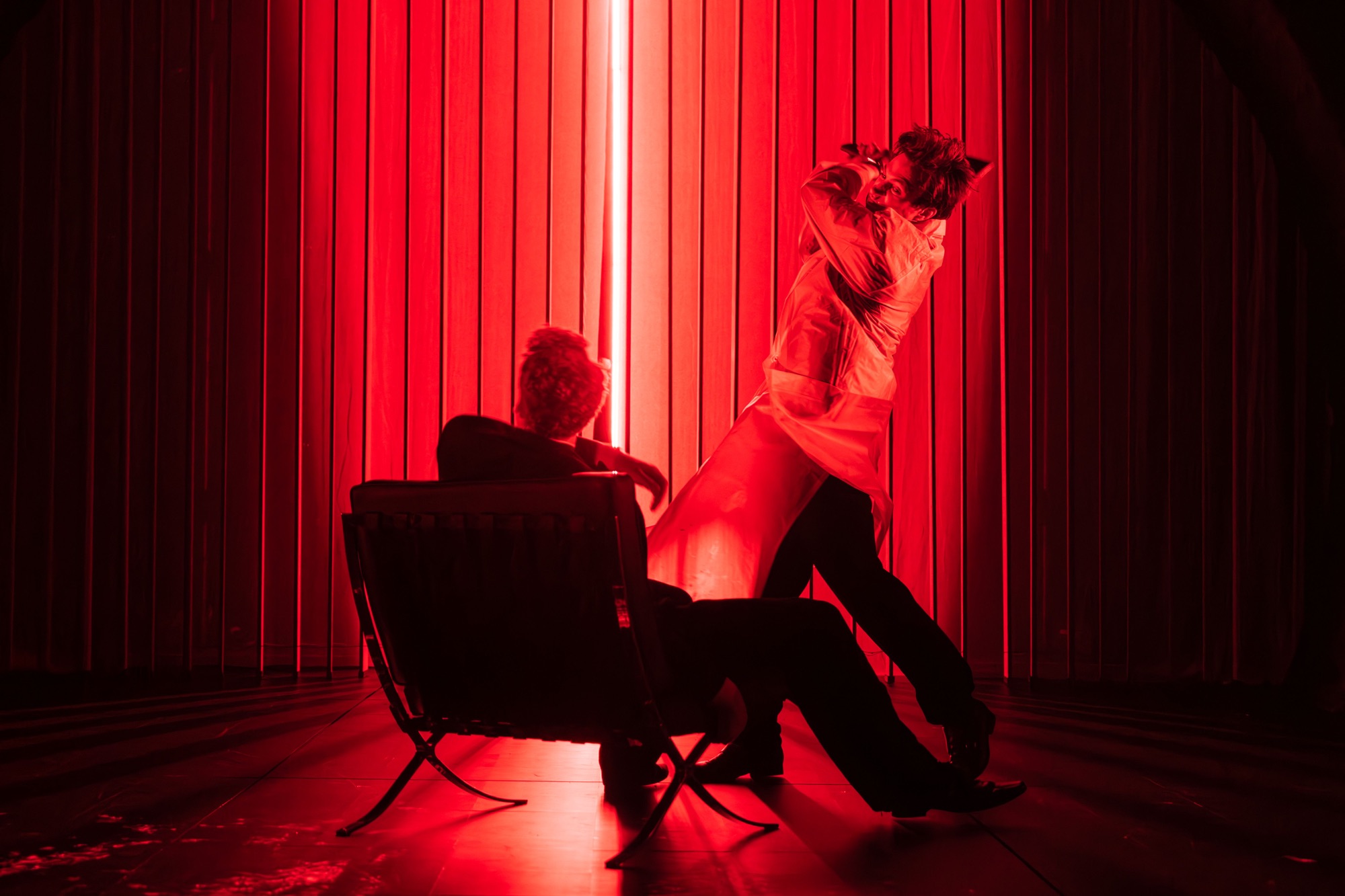
Goold directs all of this with a carefully-calibrated detachment, ensuring that only Jean is treated as a real person and that everyone else becomes alternately a source of disdain and of amusement. Characters are kept in near-constant motion, so much is there to do in their lives and yet so little that truly hold their interest for more than a moment. The full space of the Almeida is utilised, with every possible entrance or exit accounted for, and the audience themselves becoming part of the playing space with actors appearing in the stalls and the circle, on the stage and speaking across it. We are firmly enmeshed in the world of Patrick Bateman, and Goold’s control of this is remarkable.
Also remarkable is the visual identity of the show. Es Devlin joins the returning team to deliver minimal presentations of the various locations through which we follow Bateman, keeping a blankness to the surroundings that reinforces how truly indistinguishable the myriad of investment bankers are. A prostitute comments that the second apartment he has taken her to is noticeably larger, but plays well into how smartly-similar Devlin’s set has remained by remarking on the two not being all that different. This likely earned her a premature execution, but it certainly serves to draw attention to Es Devlin’s subtly strong work.

Photography by Marc Brenner.
Lighting and video design, by Jon Clark and Finn Ross respectively, cement the striking nature of Devlin’s set design, and expand beyond these setpieces to turn the entire stage into a manifestation of Patrick Bateman’s damaged psyche. The stage itself morphs through projections and we are moved through the literal lights of nightclubs and the metaphorical ones accompanying Bateman’s mental fracturing, bringing his world more fully to life, and demanding that we be fully engaged with his increasingly warped view of the world.
With everything working so completely in its favour, and such a clear grasp from everyone involved on the themes and central tone of the versions which have come before, American Psycho‘s return is more than welcome, and a show this vivid and entrancing will be truly missed when it is again gone from the Almeida. Well-performed across the board by this new company, and with the returning backstage team on fine form, this revival serves as a reminder than the seemingly endless adaptations on the London stage are not all unwelcome, but sets a high bar for adapting already-respected material.
Photography by Marc Brenner.
Final Thoughts
⭐️ ⭐️ ⭐️ ⭐️ ⭐️
Thrilling. Chilling. Killing.
Perhaps this will set a new trend, in which a new production of American Psycho arrives on the Almeida Theatre’s stage every thirteen years. But with Goold’s moving on leaving that an unlikely outcome, I rest easier knowing that this new revival preserved the strengths of what came before, and proved that there was still real depth to be mined in the material, particularly as more and more 80s bigwigs are revealed to be… well, throw in your critique of choice here…

 Sam Waite - Writer & Reviewer
Leave a comment