What’s the story?
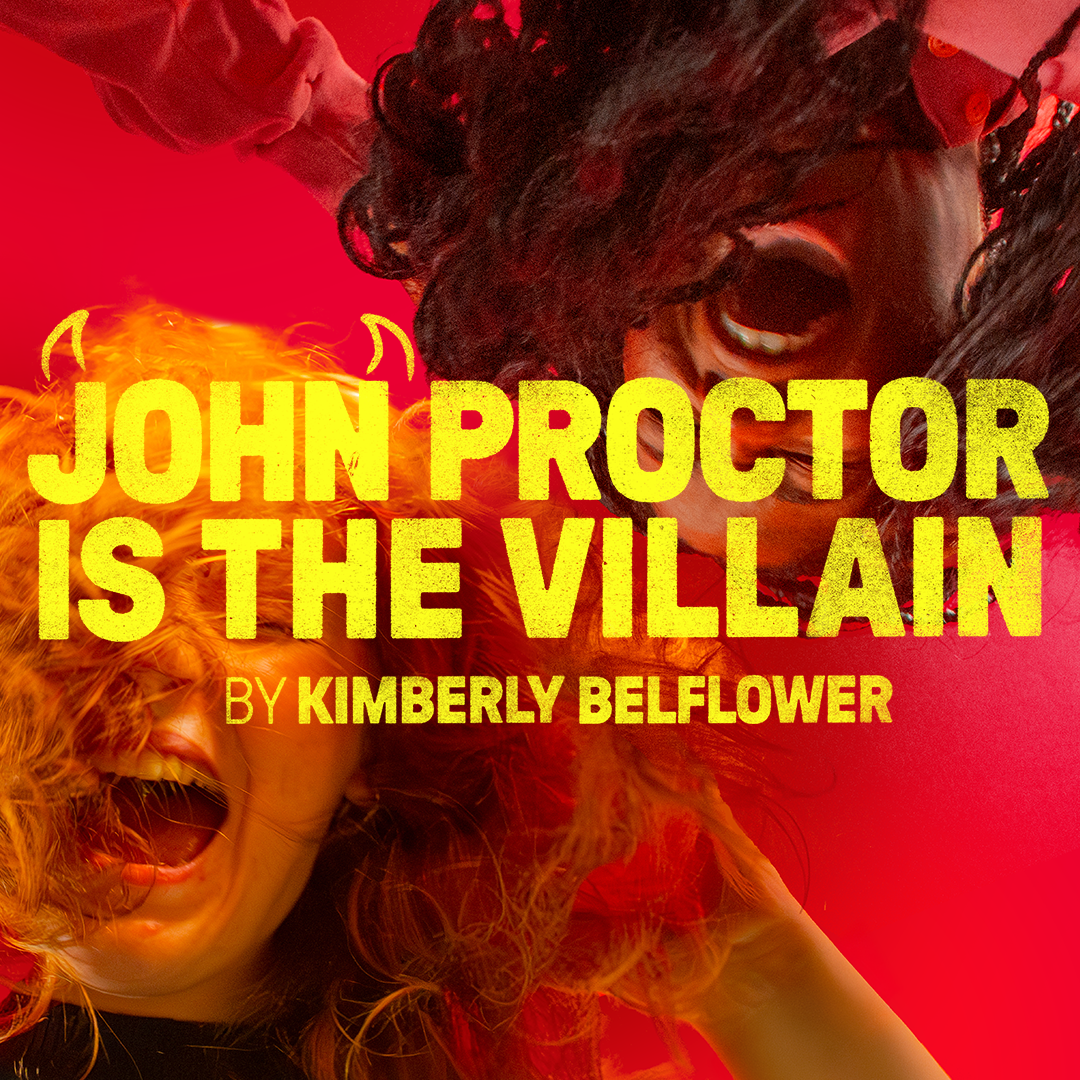
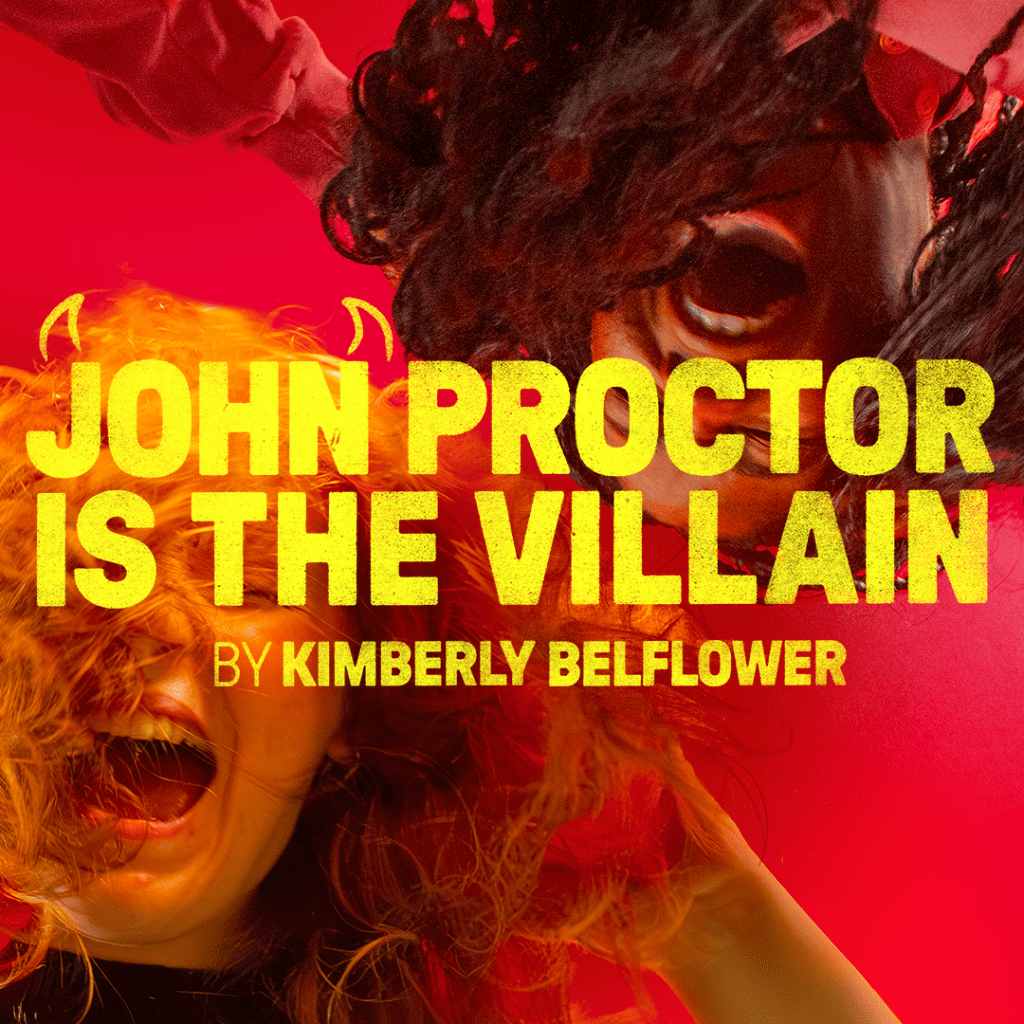
A group of students in small-town Georgia find parallels between the events stirring in their insular, “one stoplight town” and their reading material, as favourite teacher Mr Smith takes them through Arthur Miller’s enduring classic, The Crucible. But does Kimberly Belflower’s revisionist take pull its title from a potential interpretation of Miller’s text alone, or has something about the beloved Proctor struck a chord with one of these girls as they navigate the peak of the #MeToo movement?
Where is it playing?
John Proctor is the Villain continues a sold-out run at the Royal Court Theatre, in the Jerwood Downstairs auditorium until April 25th 2026
More information and any potential ticket releases can be found on the theatre’s website.
- £15 tickets for Monday’s performances go on sale at 9am each Mondayfor those signed up to the Royal Court’s website.
- Returns for other dates are put on sale at 12pm the day of the performance.
- The venue also run an in-person returns queue 90 minutes before showtime for any returns for the same day, and a rush for £25 tickets runs on TodayTix Tuesdays through Saturdays at 10am.
This review was written of my own volition, having paid to attend the production’s Writers’ Night (March 25th)
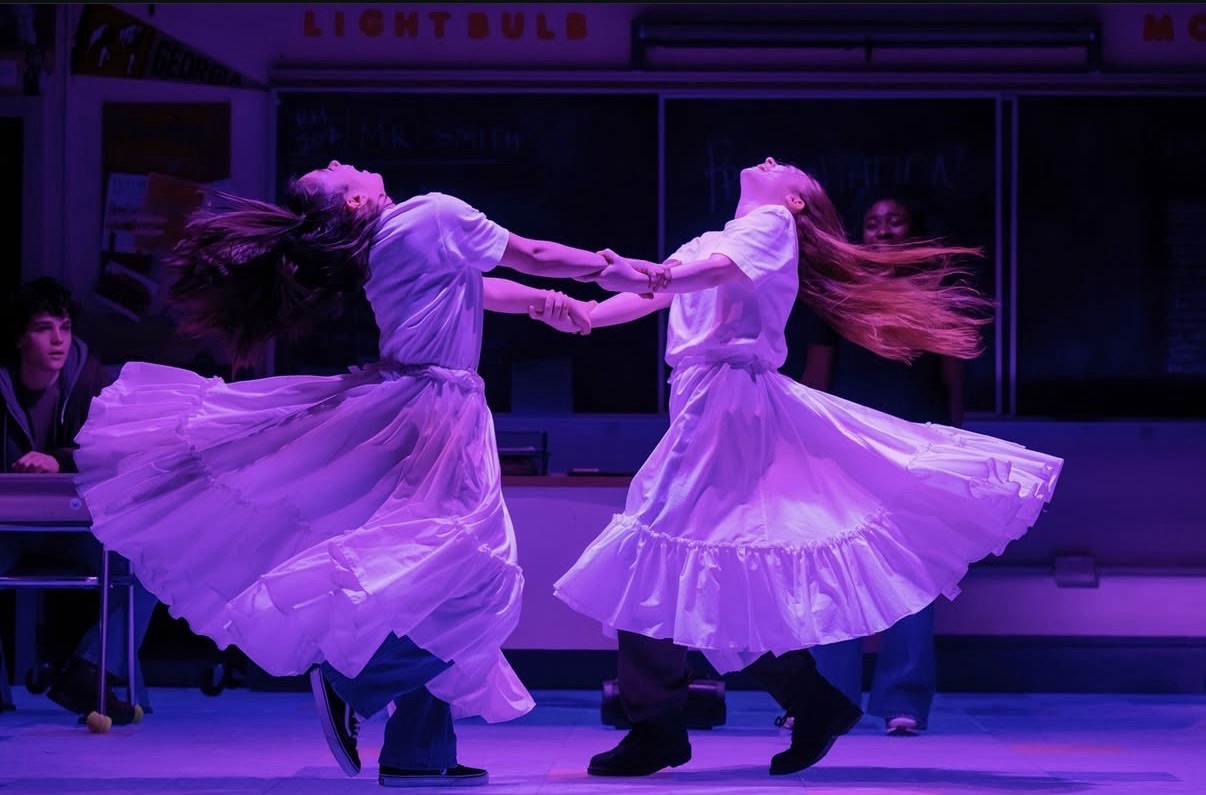
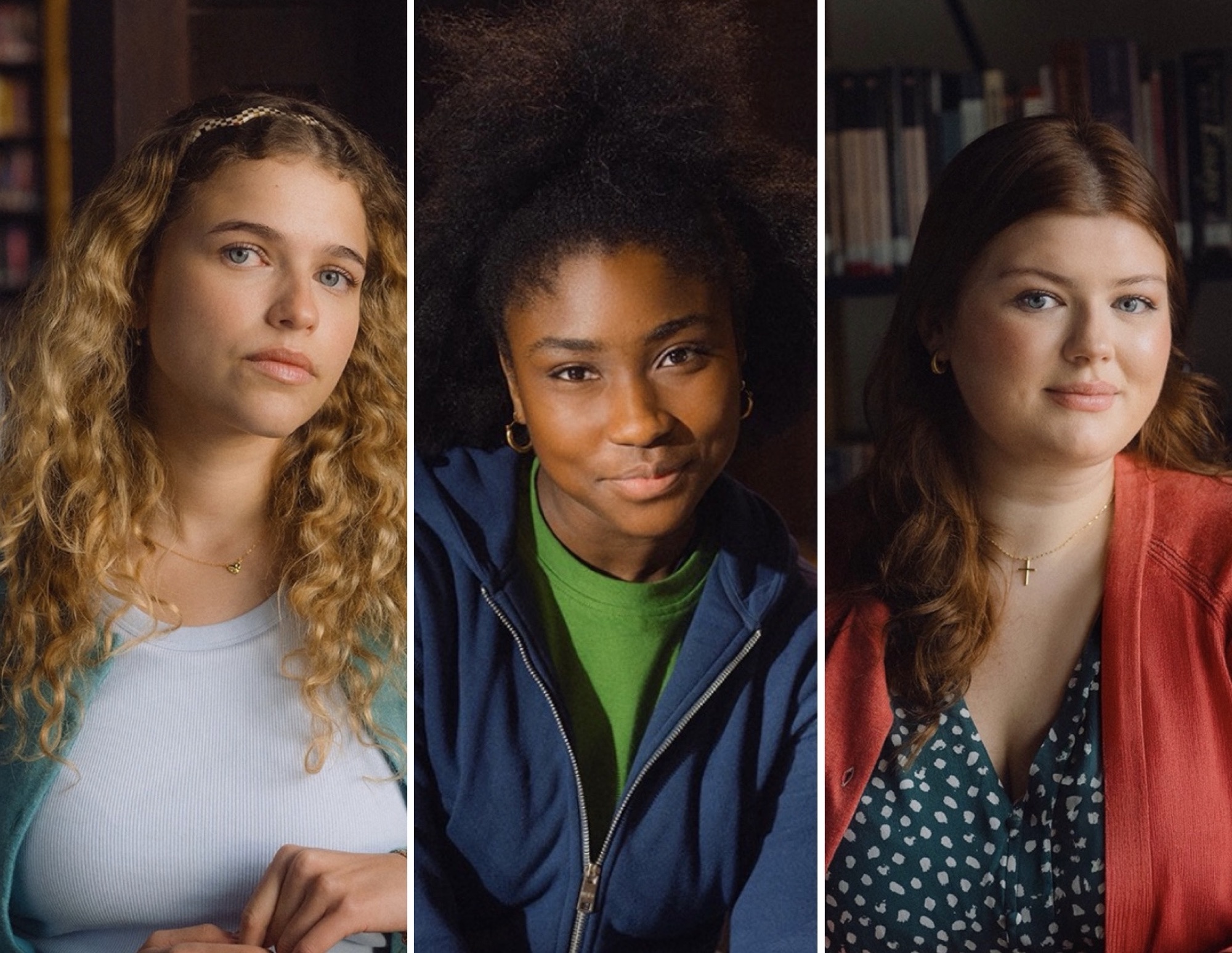
L-R: Reece Braddock (behind), Miya James, Sadie Soverall
Photography by Camilla Greenwell
Spoiler-Free Thoughts
At this point, the love for John Proctor is the Villain is beyond apparent, with Broadway extensions, rave reviews, and this UK premiere sold out months ahead of performances starting. But we’ve all been burned before, believed the hype and walked away defeated by what we’ve seen not meeting our high expectations, and so I arrived at the Royal Court excited but wary. And for a while, I was sure those lofty expectations could be met…
Belflower draws a vivid picture of what life is for teenagers in this never-named town, making it apparent from the offset that everyone knows everyone, and therefore everyone’s business. With the help of Mr Smith, four junior girls begin a feminist club at their high school, pivoting more into examining literature to sidestep objections to such a “difficult” subject and drafting in two of the boys. This being a tight-knit community, one of these boys is, of course, the cheating ex of one of the founders.
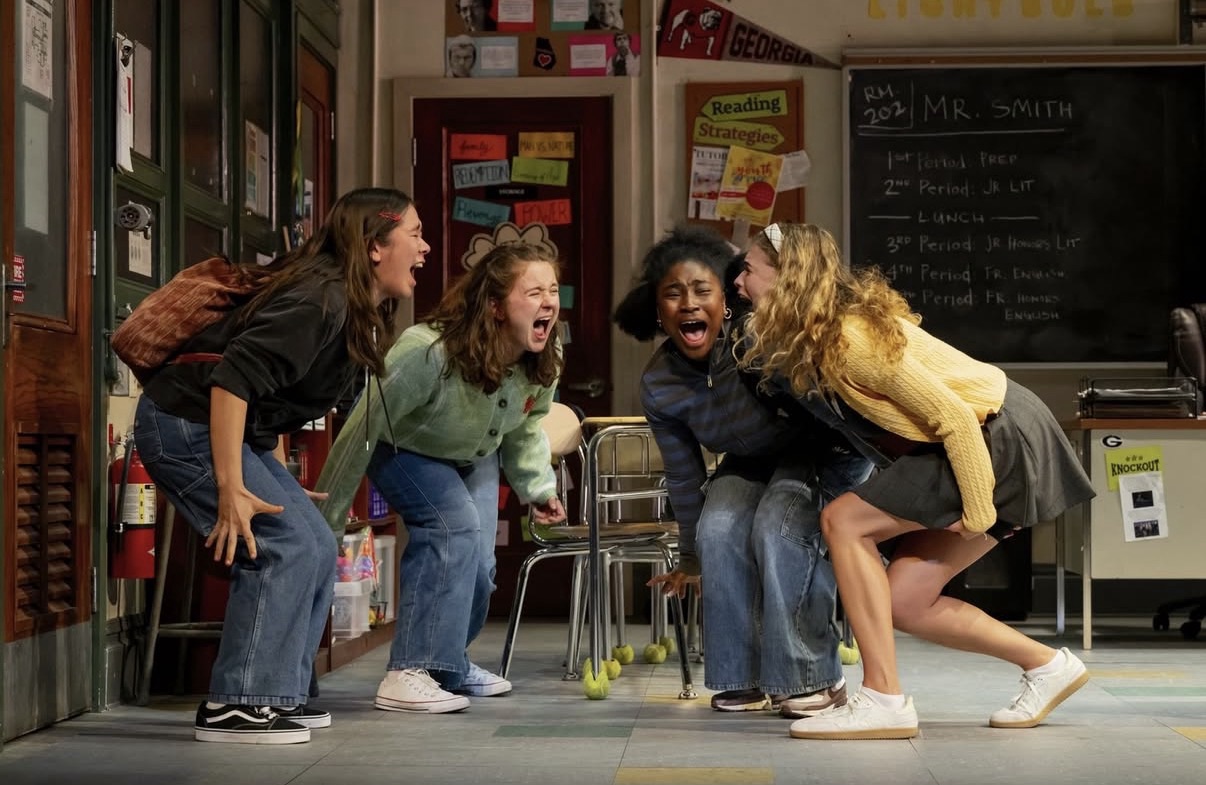
L-R: Miya James, Holly Howden Gilchrist, Lauryn Ajufo, Clare Hughes
Photography by Camilla Greenwell
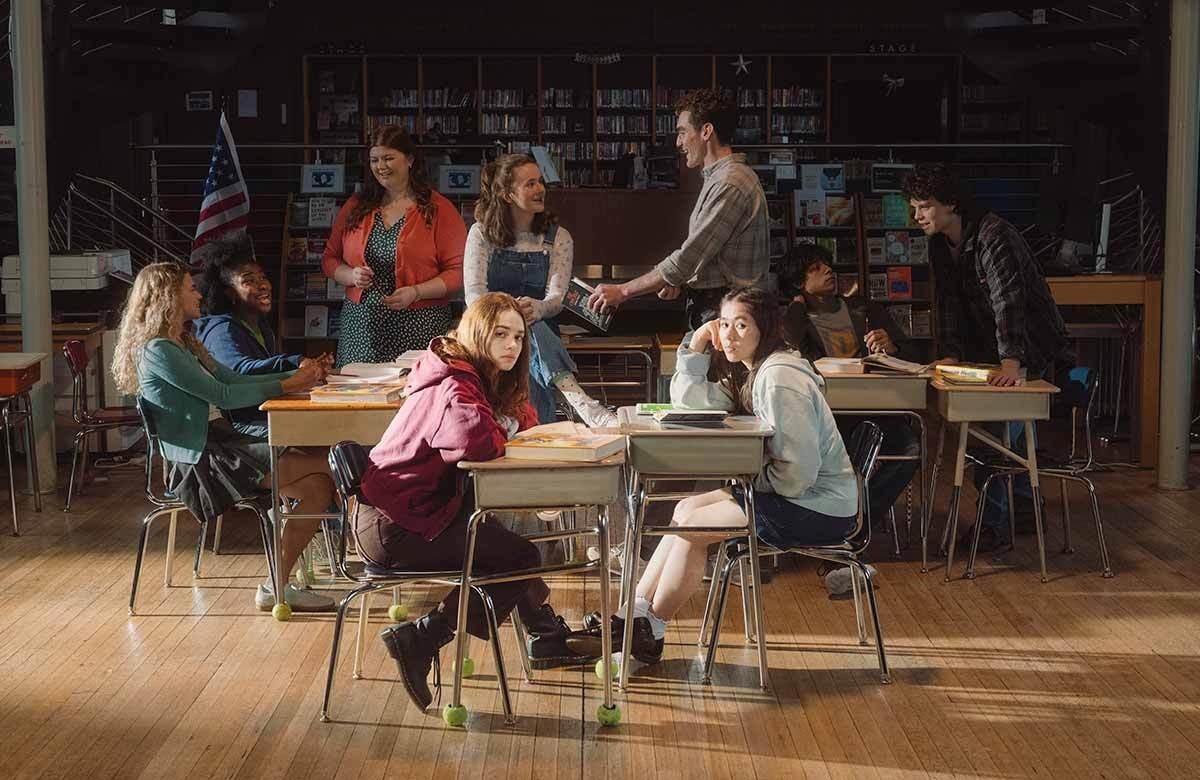
Up front, I must compliment the set, from scenographic collective AMP and Teresa L. Williams. Aside from one key scene, John Proctor is the Villain takes place within a single high school classroom, and the details here are both subtle and broad, full shelves of textbooks and rows of lockers visible only to some of the audience within a storage closet or outside in the hallway, inspirational decorations and learning matrials hanging proudly on the walls. Mr Smith’s room feels like a real classroom, be it one we’re seeing on an American teen drama, or in the not-dissimilar schoolrooms of the UK. Sarah Laux’s costume design also lends itself well to the setting, the characters all being distinct enough in their styles to not blend together, but having clearly been selected from the same narrow pool of outlets.
The introduction to rural Georgian life is very well-executed, with Belflower’s script demonstrating not only a sharp understanding of the talk-around-it ways those in authority will keep “difficult” ideas at bay, but also the intellect that has so often been overlooked in the youth, and particularly in teenage girls. Yes, it’s amusing to see four girls who all hold different levels of affection and resentment for Taylor Swift descend into a song they all know word for word being sung in unison, but it’s also an introduction to the girls’ intellectual relationship with pop culture as well as more conventional, “classic” reading – the group hold up Lorde’s “Green Light” as the greatest song ever written and awkwardly add “and that’s what you missed on Glee!” to the end of a dramatic monologue, but it’s also two of these teens whose Joan Didion reference flies entirely over the head of their Lit teacher.
Respect for the intelligence of these teen characters remains refreshingly present throughout, alongside an early raising of an idea that remains under the surface: their being fixated on the behaviour of the men around them isn’t inherently unfeminist, particularly as the misdeeds of these men become all the more relevant to their lives. The arrival of Shelby, away for several months after a tryst with another of the girls’ boyfriend, brings this acknowledgement of intellect into sharper focus, our being told that she has been historically underestimated and met with repeated “you know how she is” assessments, but being the character who both brings up the titular concept and best reflects that aforementioned brainpower.
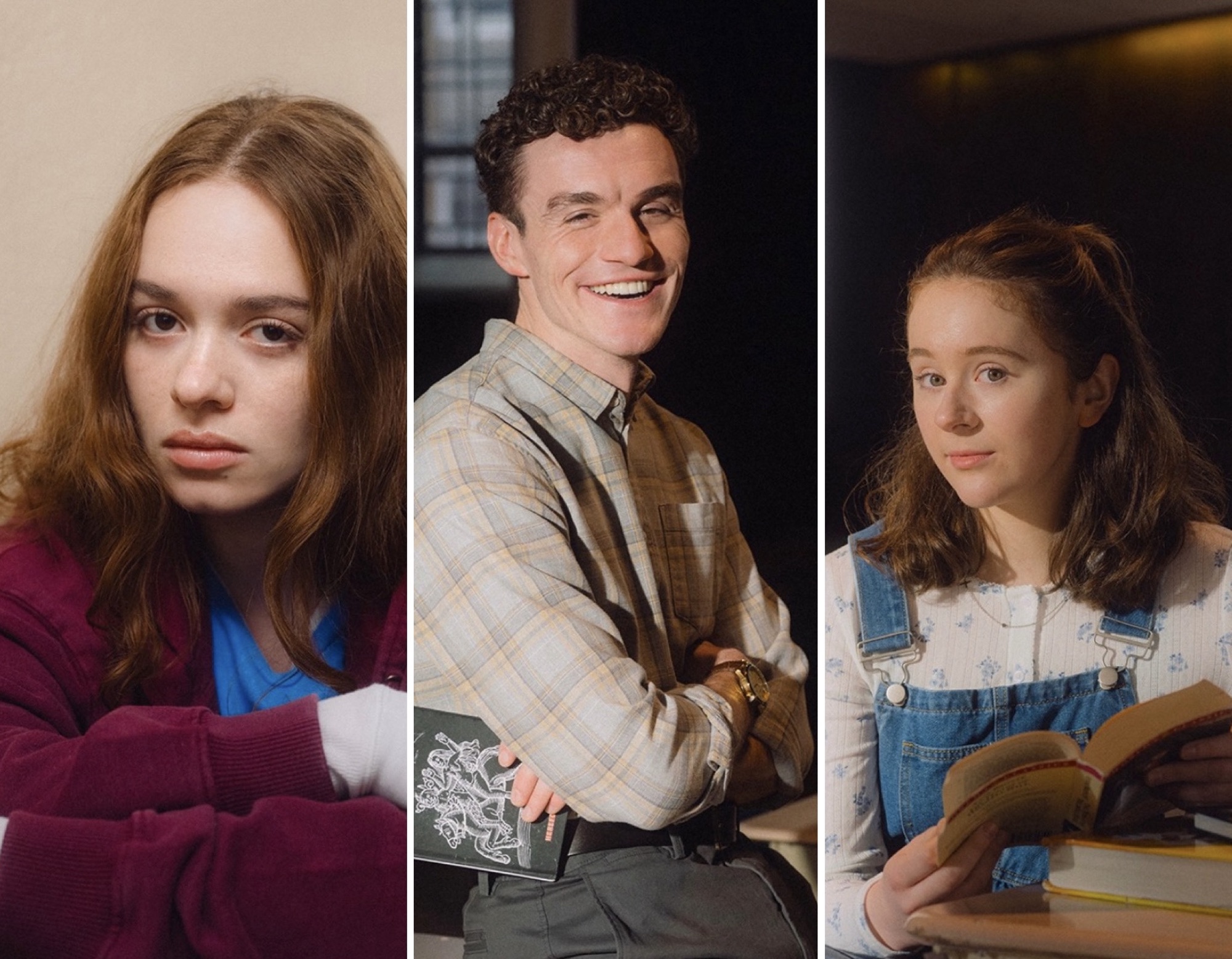
L-R: Sadie Soverall, Dónal Finn, Holly Howden Gilchrist
All this is to say that I have a great deal of respect for Kimberly Belflower, with her world easy to access and understand, but still capable of surprises. However, by the time Shelby makes her delayed entrance, that breathless quality of the first scenes has begun to fade away, and one could argue the discussion which sharply pivots the story ought to arrive sooner. One girl, Ivy, struggles with the idea of continuing their club when an accusation is levelled at her own father, but this ongoing journey of self-conflict felt under-explored and felt like a mere footnote by the show’s finale.
The cast are all strong performers, even as some Appalachian accents feel more secure than others, and each of the girls – the two boys are firmly secondary figures – is taken capably through rich emotions. Danya Taymor heads the returning team from the Broadway production, and it is the amount seemingly kept the same that I found most troubling about John Proctor is the Villain. Taymor’s understanding of the work is clear, her guidance of the emotional journeys solid, but certain moments of blocking feel mechanical, as if they are happening not authentically as part of a fully-formed performance but because that’s what the actors in New York had been guided toward in rehearsals.
Particular praise must go to Sadie Soverall, tasked with taking on the role played by the Broadway run’s best-known performer, Stranger Things star and current West End leading lady Sadie Sink. From her awkward first entrance, Soverall’s Shelby buzzes with a nervous energy that climaxes with a monologue rooted in the titular premise, and her balance of awkward, self-aware teen and struggling “young woman” navigating too much too soon is breathtaking. Soverall also has a frosty dynamic with Miya James, as former bestie Raelynn, which softens as the pair reconnect into something genuine, warm, and entirely familiar.

L-R: Reece Braddock, Miya James, Charlie Borg
James is, and I mean this firmly as a compliment, the most believably teenaged of the girls, giving Raelynn that endearingly anxious quality of someone who feels they need to make life-altering choices right now while still palpably aware of still being, ultimately, a child. Likewise, Holly Howden Gilchrist’s Beth, college-focused and truly considering her favourite teacher a friend, feels authentically at her own crossroads, getting across that sickening sense so many of us have had, that we aren’t enough, but are at a loss for what it is that could take us past that feeling.
The remainder of the small class have their own highlights, but none quite resonate the same way. Lauryn Ajufo’s Nell comes closest, with the combination of her budding romance with a classmate and a sense of doubt beneath her projected self-assuredness being truly compelling. Beyond Mason’s (Reece Braddock) surprising dedication to the material and Lee’s (Charlie Borg) occasional attempts to reconnect with Raelynn, the boys are, understandably, given little to do. Ivy (Clare Hughes) and guidance counsellor Miss Gallagher (Molly McFadden) are both strong presences when properly utilised, but Ivy’s popuular-but-likeable presence fades into the background too quickly, and while entertaining, Miss Gallagher’s later revelations leave her feeling more like a plot device than a fully-formed character.
Standing alongside Shelby as the strongest of Belflower’s characters, and alongside Soverall as the productions strongest actors, Dónal Finn brings a magnetism to Mr Smith that allows for some harsh, compelling shifts later on. Believable as both a beloved teacher and a stand-in for the hotly-debated Proctor, Finn is endlessly watchable, though I must say that I found his being too young for the part repeatedly apparent. Still, even though a pair of moments referencing the character’s age did briefly pull me out of the narrative, his acting was consistently engaging.
L-R: Clare Hughes, Lauryn Ajufo, Molly McFadden
Something truly thrilling to find in John Proctor is the VIllain‘s credits is the presence of Katherine Hardman as intimacy coordinator, demonstrating that this essential job shouldn’t be present only when sexual situations are simulated, and proving a real desire to keep the company’s safety and comfort in mind as they tackle some undeniably weighty themes. While John Proctor is the Villain wasn’t as consistently winning for me as for many others, I’m glad to know that there are artists willing to tackle these important topics, and to know that the safety of all involved is kept firmly in mind is a wonderful thing.
Finally, movement director Tilly Evans-Krueger must be given praise for, in particular, the climactic final scene. For those excited to see the show for themselves, I won’t go into any detail about this sequence, but will say that I found John Proctor is the Villain‘s final scene deeply impactful, utterly thrilling, and found in them a searing quality that I wish had been more deeply felt in some of what had preceded it. Sometimes material doesn’t land for viewers, and unfortunately this was the case for my visit to John Proctor is the Villain, but for those final few minutes I was finally as enraptured as I had been during the show’s introductory moments.
John Proctor is the Villain didn’t hit me the way I’d hoped, but for so many that spark is already there, and I truly hope that those who have waited for this show, who prayed that this transfer would happen, find everything they are looking for in this production. Nothing can be for everybody, but if this show can help to expand significant discussions, and can ignite the passions of others, then their reactions are what really matters.
Photography by Camilla Greenwell
Final thoughts
Provocative. Questioning. Hyped.
⭐️ ⭐️ ⭐️
Despite being so thematically in line with what I want from the arts, tackling challenging but essential themes and holding our adoration of “classics” up to a microscope, John Proctor is the Villain left me cold in too many places. Whether its an issue of the replica production feeling too false, or simply this text and myself being ill-fitting to one another, something kept me at arms’ length, despite a desperate want to love it.


 Sam Waite - Writer & Reviewer
Leave a comment