What’s the story?
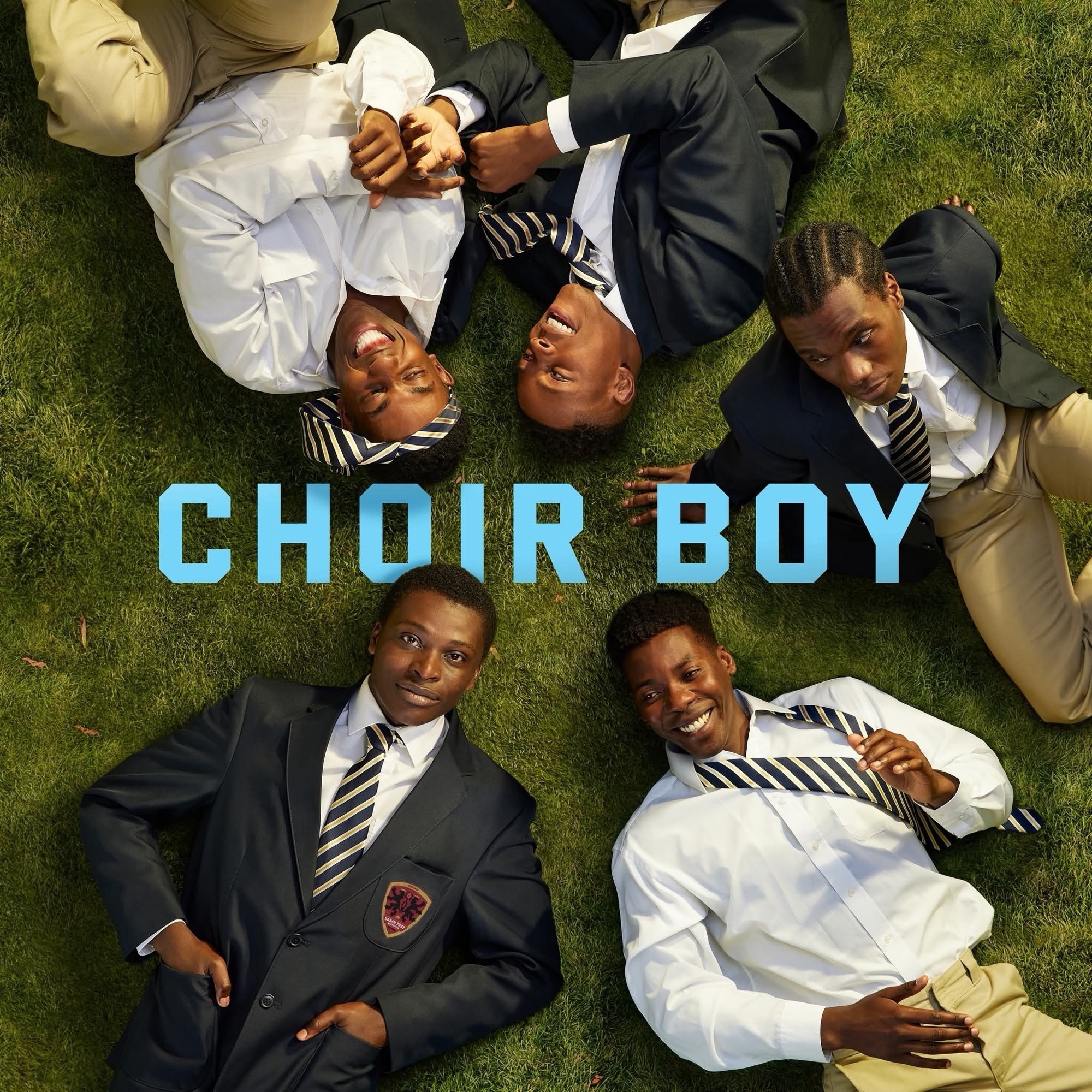
At the prestigious Charles R. Drew Prep School For Boys, the handful of students deemed capable enough hold pride of place in the school choir. Among these few is Pharus, a gifted vocalist whose golden opportunity to lead the previous term’s confirmation was hampered by a distraction from Bobby, envious of Pharus’ position as new choir leader and all-too-prepared to express his distaste for his sexual orientation. The inner workings of the choir and its members come to light as Pharus and his roommate stumble through their final year as Drew Men in Terrell Alvin McCraney’s coming of age play.
Where is it playing?
Choir Boy plays at Stratford East until April 25th 2026
Tickets and information can be found on the theatres website.
This review was written of my own volition, having paid to attend.
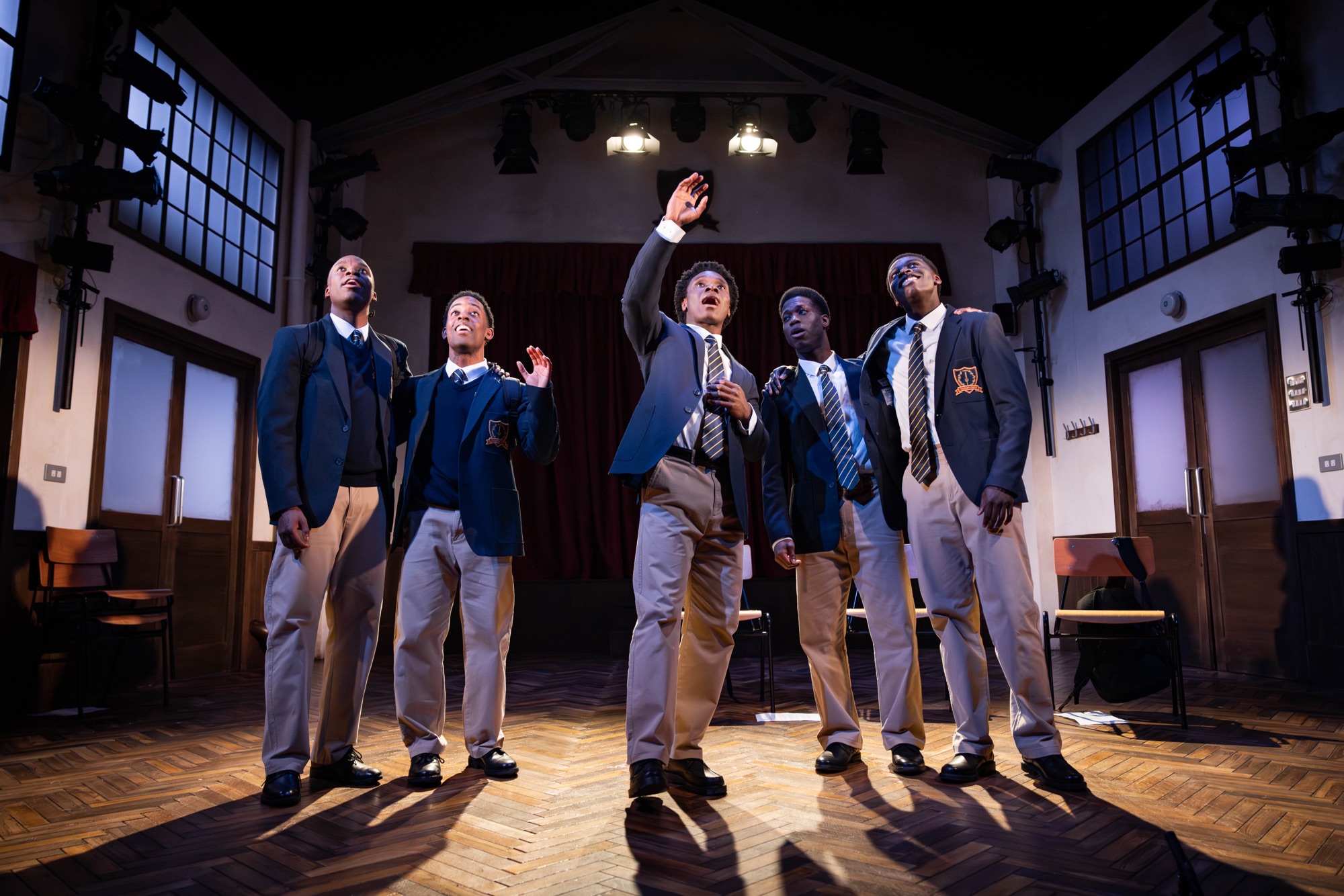
L-R: Rabi Kondé, Khalid Daley, Michael Ahomka-Lindsay, Freddie MacBruce, Terique Jarrett
Photography by Mark Senior
Spoiler-Free Thoughts
In so many boarding school stories, we encounter that classic trope of the students following firm to a code of conduct which has, we know, nothing to do with the actual school rules. So it’s of little surprise when we discover that “Drew Men” do not report one another’s misbehaviour, something which Terell Alvin McCraney’s script for Choir Boy uses nicely to maintain an insular, walking-on-eggshells quality to the scenes shared between Pharus and his fellow members.
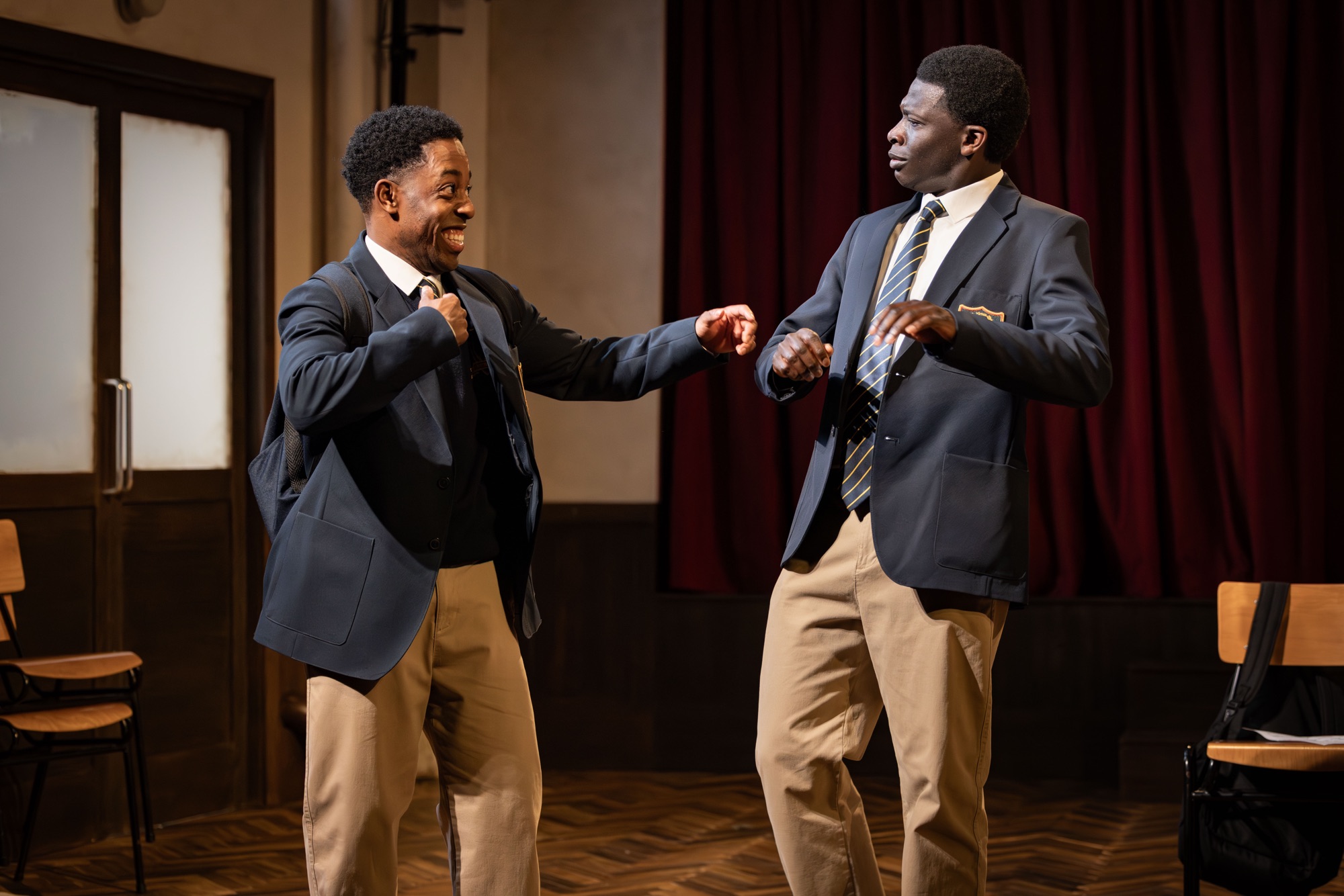
From the offset, every relationship is drawn clearly, but with subtleties and texture which allow relationships to develop. Animosity between openly gay Pharus and the headmaster’s nephew, Bobby, grows compellingly as we see allusions to a musical rivalry alongside their clashing personalities. Alternately, a friendship between Pharus and AJ, seemingly stemming from their position as roommates, flourishes throughout the show into a heartwarming, emotionally rich connection. Most welcome, if you’ll allow me the one spoiler, is that AJ and Pharus’ bond grows in intimacy and affection, without shoehorning a cliched realisation of same-sex attraction – AJ’s heterosexuality is maintained, and his friendship with Pharus is allowed to blossom into brotherhood rather than a romantic option.
Photography by Mark Senior
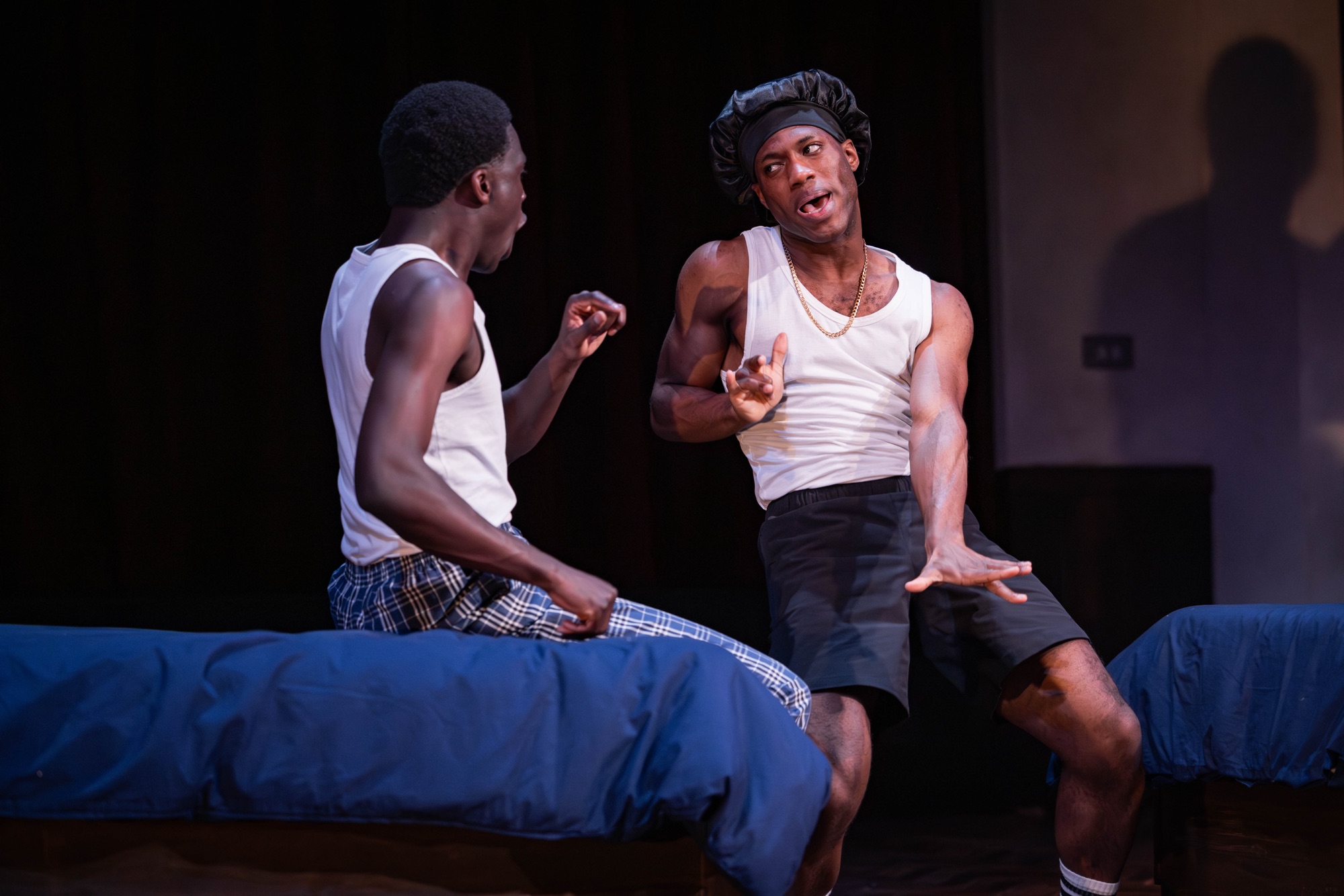
The cast are all incredibly strong, with Terique Jarrett on top form as Pharus, the character’s openness from the start allowing him to flex his comedic muscles up front. Jarrett is also believable in his suffering, bringing a depth to more emotional scenes to balance the comedic brilliance he can shift to mere moments later. The chemistry between Jarrett and Freddie MacBruce’s AJ is also formidable, MacBruce’s own performance being measured and laid-back, allowing for some heartfelt moments of tenderness as well as hilarious back-and-forths. AJ requires a delicacy in his delivery, one that allows a sense of traditional masculinity to intermingle with an openhearted warmth, something MacBruce proves continually capable of balancing.
Michael Ahomka-Lindsay, Khalid Daley and Rabi Kondé make up the rest of the small choir, as future preacher David, rambunctious follower JR, and Drew “legacy” Bobby, respectively. Each does a fine job crafting their character onstage, though admittedly the role of David allows Ahomka-Lindsay less obvious development to go through, at least until the latter half of the show. Kondé and Daley’s obvious chemistry helps greatly in creating their long-formed bond, and the slight disconnect between Ahomka-Lindsay and the rest of the choir boys does work nicely with the narrative, adding to David’s perceived detachment in his recently-started journey toward the priesthood.
Photography by Mark Senior
Set design from Max Johns is simply but effective, with the endless identical rooms of a church-run boarding school all being played by the one room, with changeable backdrops and rolling beds able to transport us to other spaces. With the curtains of the school auditorium opening at first to reveal only heavenly (one would presume) light, the effect of the upstage space becoming the communal showers is surprising and effective in equal measure. Nao Nagai’s lighting becomes suitably muted during scenes set in AJ and Pharus’ room, allowing the darkened surroundings to suggest a new space entirely from the same choir room in which we just watched them rehearse.
Director Nancy Medina, with the support of co-director Tatenda Shamiso, keeps up a strong energy between the characters, suitably boisterous and volatile for the teenage characters. A more dignified air carries though scenes with the two adult characters, Daon Broni’s Headmaster Marrow and Martin Turner’s MR Pendleton, demonstrating the directorial pair’s understanding of how the age and stature of its characters ought to impact the tone of each scene. Each of the choir boys is given his own struggles, and his own moments of emotional maturity, but Medina and Shamiso never lose sight of the reality that they are still children navigating a world still unknowable to them.
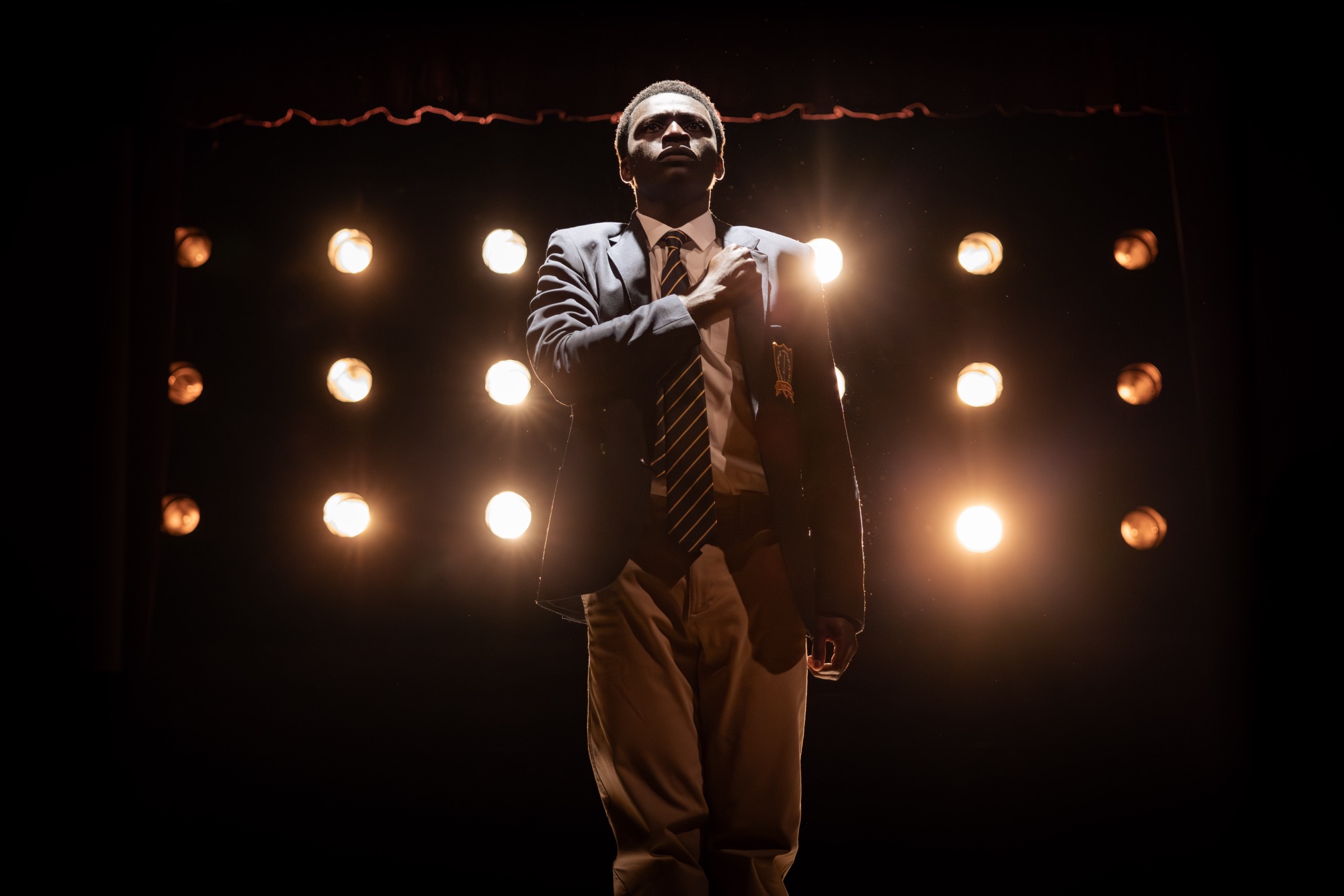
Photography by Mark Senior
Music, of course, plays an important role within Choir Boy, and this is another point for praise but also where cracks begin to show. All five young actors prove themselves as wonderful singers, even as the play-with-music setup causes their vocal abilities to be more retrained. However, one scene features a song being performed diageticly as an act of compassion for a grieving member, something not at first clear given that other musical sequences are primarily used (effectively, I must add) to aid transitions between scenes. In addition, the need for fuller harmonies means that one actor is present in a latter scene that the story tells us he shouldn’t be there for, and his going unacknowledged deepens this confusion and makes it painfully clear that his onstage vocals are the only reason for his presence.
Still, such quibbles are easy to put aside when all that has come before, and indeed what comes after, is as strong as what is presented in Choir Boy as a piece, and in this largely-sterling production. With a quintet of young talents as its heart, Choir Boy is a refreshing examination of teenage friendships where a queer character is present and developed, but also allowed to grow genuine friendships with those acting as brothers to him. This is not only a welcome addition to the London stage, but also my introduction to Terell Alvin McCraney, a playwright I certainly hope to see more from.
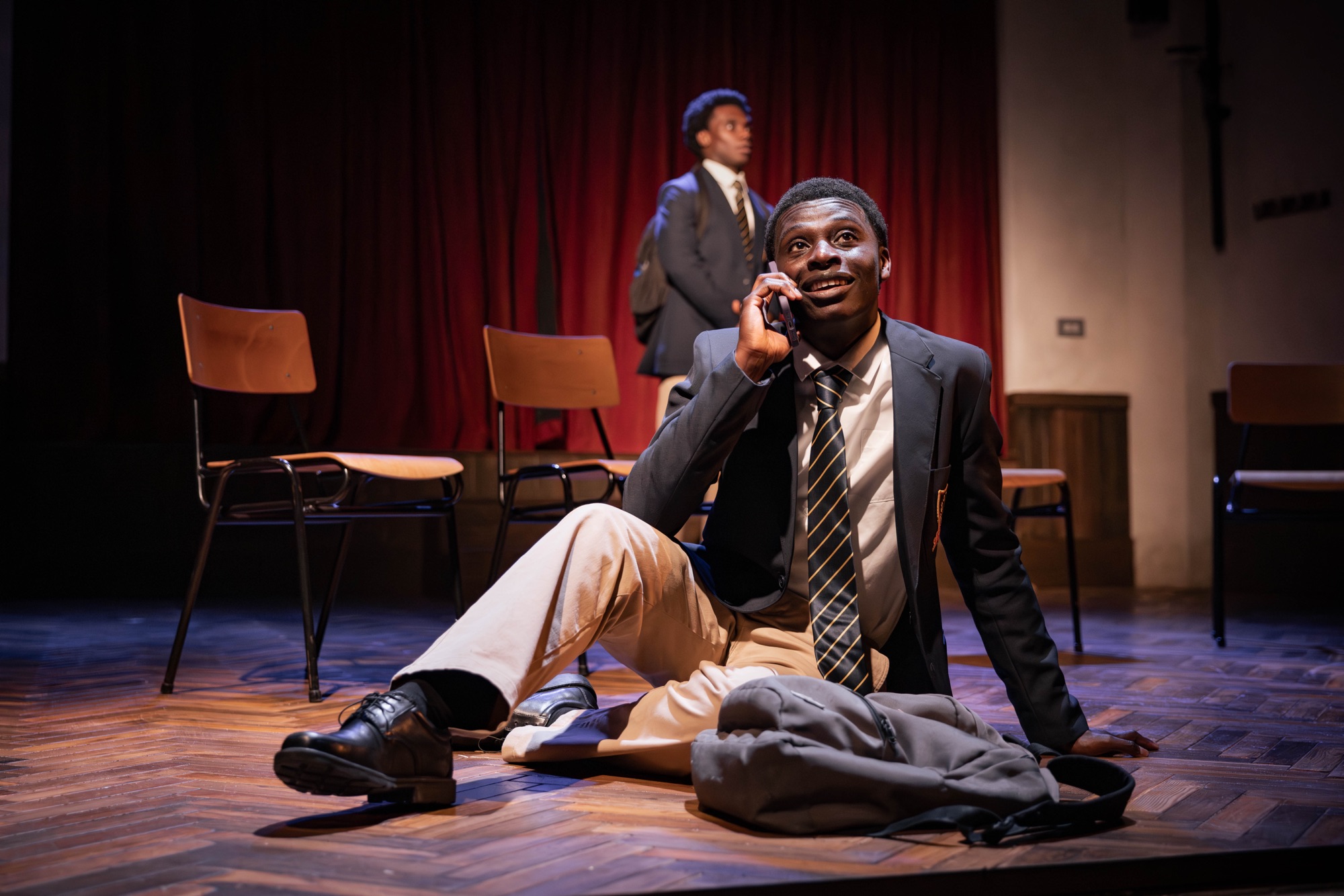
Photography by Mark Senior
Final Thoughts
Provocative. Powerful. Precise.
⭐️ ⭐️ ⭐️ ⭐️
Well-acted and well-sung, Choir Boy succeeds largely because of the strength of its cast, but also thrives thanks to writer McCraney’s commitment to allowing his queer lead to have real, developed friendships with the men in his life. Even where hints to a past romance develop and blunten elsewhere, that fraternal devotion, a palpably affectionate kinship between friends without the complications of romantic love, proves to be Choir Boy‘s greatest asset.
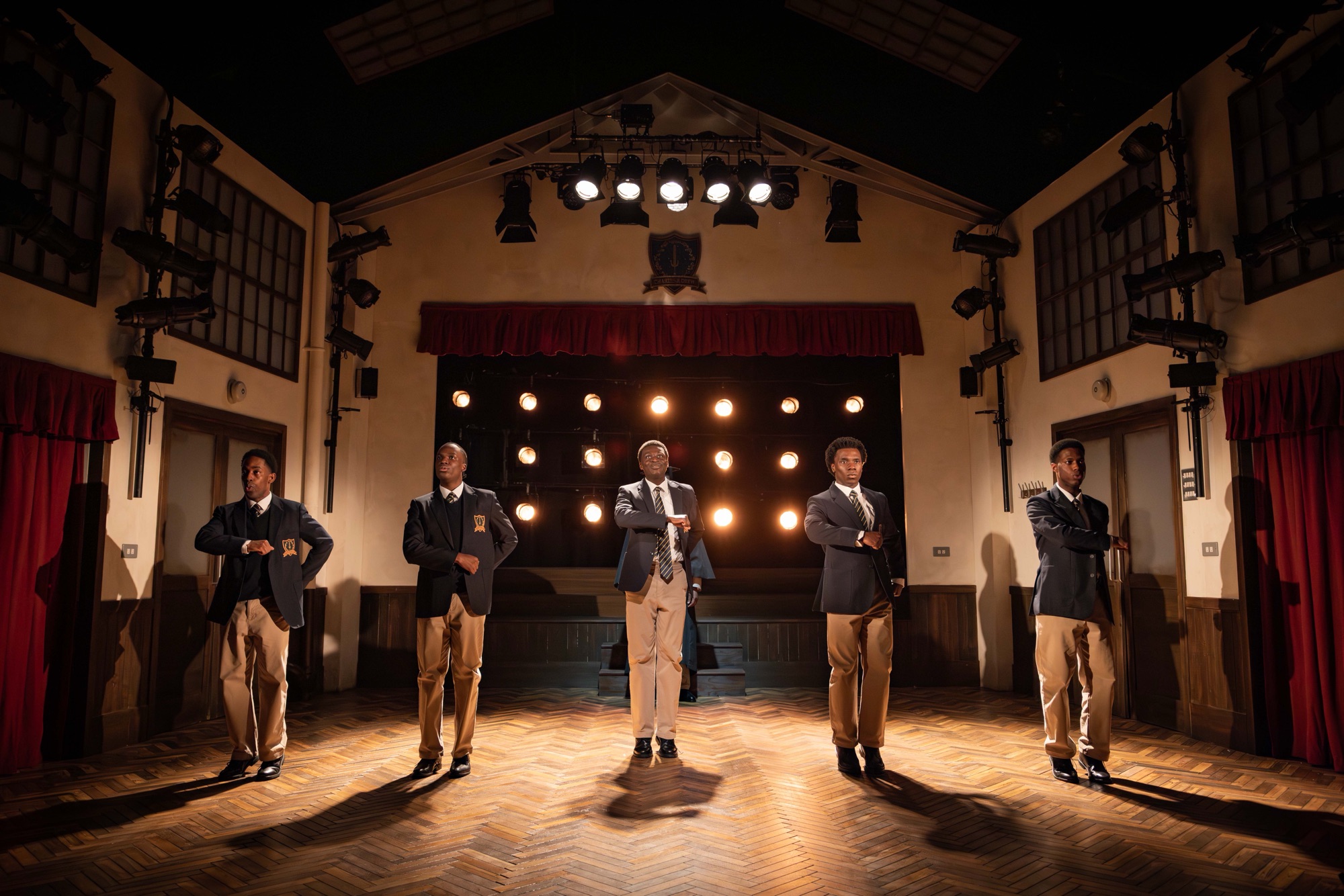
L-R: Khalid Daley, Rabi Kondé, Terique Jarrett, Michael Ahomka-Lindsay, Freddie MacBruce
Photography by Mark Senior




Leave a Reply